 Bellingham Siding
 Composite Decking Built for What Cordata's Weather Does to a Deck
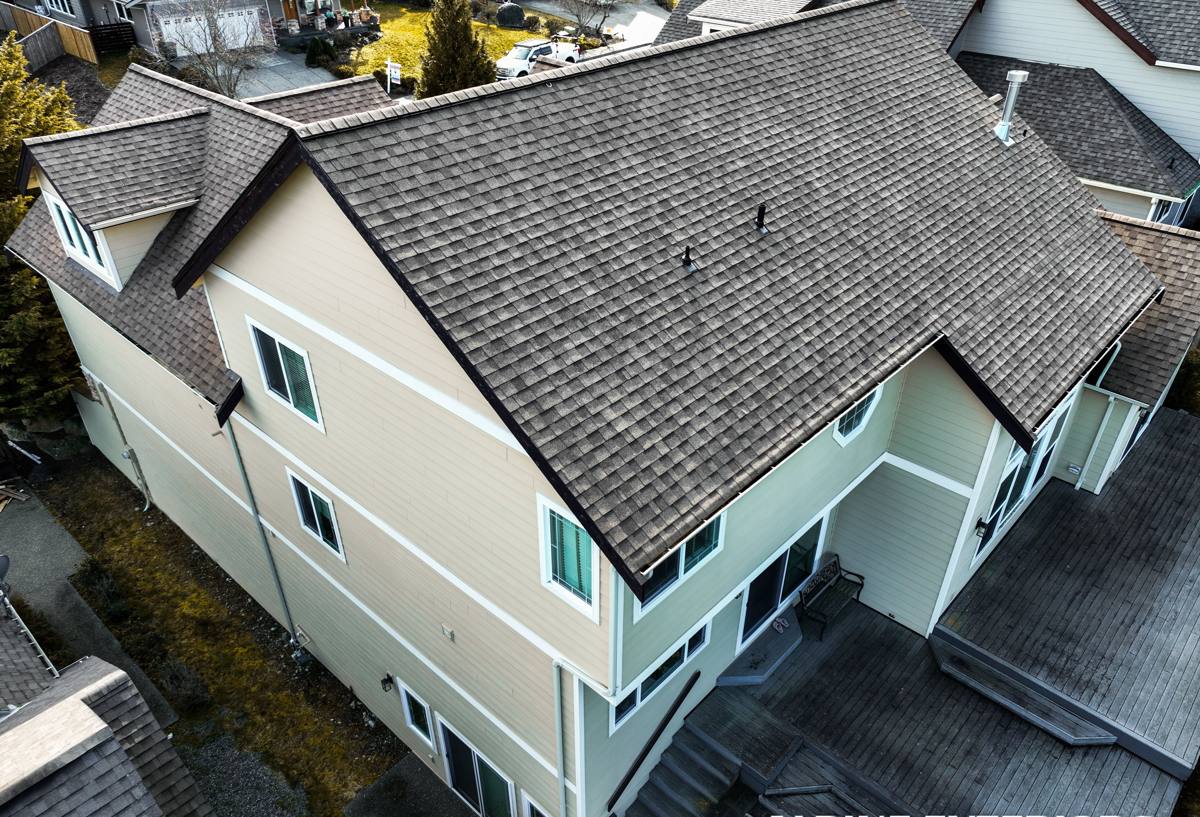
Homes in the Cordata neighborhood deal with the same regional weather as the rest of Bellingham and Whatcom County — salt-tinged marine air, rain that comes in sideways more often than straight down, and a moss season that stretches across most of the year on anything shaded or slow to dry. A deck experiences that weather differently than a wall does. It sits horizontal, it holds foot traffic, and instead of shedding water down a vertical face, a poorly built deck surface can trap water against itself, between boards, and against the framing underneath it. Composite decking was developed partly to solve the moisture and rot problems that plague wood decking in exactly this kind of climate, but the material only delivers on that promise when it's installed correctly.
This page is specifically about composite decking for Cordata homes — what this climate actually demands from a composite deck build, what a correct install involves underneath the surface where most homeowners never look, and how our process works for a project in this part of Bellingham.
What This Climate Demands From a Composite Deck
Driving Rain and the Ledger Board Connection
The single most common point of hidden rot on any deck, composite or wood, is the ledger board — the framing member bolted directly to the house that the rest of the deck hangs off of. Wind-driven rain gets pushed up and behind ledger boards that aren't properly flashed, and once water gets between the ledger and the house band board, it can sit there for a long time without ever showing on the surface. Composite decking doesn't change this risk at all, because the ledger connection is framing, not decking material. Getting the flashing membrane, standoff hardware, and drainage gap right at that one connection point matters as much on a composite deck as it does on any other.
Salt Air and Deck Hardware
Every composite deck depends on a lot of hidden metal — joist hangers, structural screws, ledger bolts, post bases, and the fastener clips that hold many composite board profiles in place. Salt-laden air common to this part of Whatcom County accelerates corrosion in hardware that isn't rated for it, and a corroding fastener loses holding strength well before it looks obviously bad. On a structure people walk and stand on, that's a real concern, not a cosmetic one. The composite boards on top can look flawless for years while underrated hardware underneath is already weakening.
Moss on Horizontal Composite Surfaces
Moss doesn't limit itself to roofs and siding. Horizontal composite decking, especially on shaded decks or ones tucked under trees, holds moisture between rain events the way a wall never has to, and that constant dampness is exactly what moss and algae need to take hold. Even composite decking with strong stain and mildew resistance still needs correct board spacing and airflow underneath to actually dry out between wet spells — the material resists staining, but it doesn't override poor drainage design.
Why Composite Outperforms Wood in This Climate
Homeowners in Cordata considering a new deck or a replacement almost always weigh composite against pressure-treated wood or cedar at some point, and the honest answer is that the climate itself tips that decision. Here's how the common decking materials actually compare under sustained Whatcom County moisture and salt exposure:
| Material | Moisture & Salt Air Behavior | Moss Resistance | Realistic Maintenance |
|---|---|---|---|
| Capped composite | Strong — cap layer blocks moisture absorption at the surface | Good on most lines | Occasional washing |
| Uncapped composite | Moderate — exposed wood-fiber core can absorb moisture at cut edges | Fair; more prone to surface buildup over time | Periodic cleaning, closer attention to cut ends |
| Cedar | Moderate — needs regular sealing to hold up to sustained rain | Fair when sealed and kept up on schedule | Regular oiling or sealing |
| Pressure-treated wood | Weak against sustained salt exposure and standing moisture over years | Poor without consistent treatment | Regular sealing or staining |
Composite decking's core advantage in this climate isn't just that it resists rot — wood can be treated to resist rot too, for a while. It's that composite holds its dimension and surface appearance through repeated wet-dry cycles without the ongoing sealing schedule that wood demands, which matters in a place where the deck rarely gets a long stretch of dry weather to do that maintenance in.
Capped vs. Uncapped Composite — Why We Standardize on Capped
Composite decking is a wood-fiber and plastic composite core, and the difference between capped and uncapped versions comes down to whether that core is fully wrapped in a protective plastic shell or left exposed on some or all faces. Uncapped composite was the original version of the product and is still sold today at a lower price point; it can perform reasonably well in drier climates, but in a marine environment with this much sustained rain and humidity, the exposed wood fiber at the board surface and cut ends absorbs moisture over time, which is what leads to the swelling, staining, and mold growth that gave early composite decking its reputation problem.
Capped composite wraps the core in a polymer shell on the visible faces, which is what actually blocks that moisture absorption and gives the board its stain and fade resistance. We install capped composite as our standard for Cordata decks because the extra durability against this specific climate is worth more than the modest cost savings of an uncapped product. That's a professional judgment call based on how each product actually behaves under sustained coastal Northwest moisture, not a claim that uncapped composite is unusable everywhere.
What a Correct Composite Deck Build Actually Involves
The decking boards get most of the attention when homeowners picture a new deck, but the framing and connection details underneath are what actually determine whether the deck holds up here. A correct build for a Cordata home includes:
- Ledger board flashed with a self-adhered membrane and installed with standoff hardware so it isn't sitting tight against the house, letting any moisture that does get behind it drain and dry
- Joist tape applied over the top of every framing member before decking goes down, protecting the wood substructure even though the surface material above it won't rot
- Corrosion-resistant or coated structural hardware throughout — joist hangers, screws, post bases, and ledger bolts rated for the exterior and salt-air exposure common to this area
- Hidden fastener systems where the board profile supports them, reducing exposed metal on the walking surface and giving a cleaner finished look
- Board gapping set to the manufacturer's specification for expansion and drainage, not just eyeballed for a tight, uniform look
- Joist spacing matched to the specific composite product's span rating rather than a generic framing layout carried over from wood decking habits
- Blocking at butt joints between boards so seams stay flat and supported instead of flexing or curling at the ends
- Ventilation and clearance maintained underneath decks built low to grade, so moisture has somewhere to go instead of sitting against the framing
Skip any one of these and the deck can still look complete on install day. What shows up later — a soft spot at the ledger, corrosion staining bleeding down through a board, a seam that's started to curl — takes a wet season or two to appear, which is exactly why cutting corners on the substructure is easy to get away with until it isn't.
Our Process for a Cordata Composite Deck Project
Site Visit and Assessment
We start by looking at the actual site — existing structure if this is a replacement, grade and drainage around the deck footprint, sun and shade exposure through the day, and how close the framing sits to grade. A deck built low to the ground or under heavy tree cover needs different ventilation and moss-resistance priorities than one that gets sun and airflow most of the day.
Planning the Build Before Material Arrives
We work out framing layout, ledger attachment, board direction, and railing details on paper first, including which composite board profile and hidden fastener system fit the design. Deciding these details before crews start cutting material avoids field improvisation, which is where corners tend to get cut on a job like this.
Permitting and Structural Requirements
Deck construction in Bellingham generally requires a permit and follows standard structural, setback, and elevation requirements, and we handle that process as part of the job rather than leaving it for the homeowner to sort out separately.
Build to Manufacturer and Code Spec
Framing goes in first, sized and fastened for what the site actually needs, followed by joist tape, the ledger flashing detail, and then the composite decking surface, railing, and any stairs. Every gap, fastener, and flashing lap follows the composite manufacturer's published installation requirements, which is what keeps their warranty intact and keeps the deck performing the way it's supposed to for decades.
Final Walkthrough
We walk the finished deck with you and cover what the specific composite product you chose actually needs going forward — for most modern capped composite, that's periodic washing and keeping debris out of the board gaps, not much more.
Why Hire a Crew That Already Works Cordata
A crew that mostly builds decks elsewhere in the county can still put a composite deck together competently, but a lot of the judgment calls that determine whether it lasts don't show up on a spec sheet. Knowing how much clearance a ledger flashing detail actually needs in a climate this consistently wet, which hardware grade holds up against the salt exposure typical of this area, and how much ventilation a low deck needs under tree cover versus open sky — that's experience built from working this specific climate across multiple wet seasons, not something a generic installation guide covers. A crew that already works Cordata and the surrounding Bellingham area has already seen which details matter here and which corners get cut on jobs that don't hold up.
Cost Factors for Composite Decking in This Area
Composite decking generally costs more upfront than pressure-treated wood and less than cellular PVC, but the total project cost on a given Cordata home depends on more than just the decking material itself:
| Factor | Why It Matters |
|---|---|
| Deck size and layout complexity | More corners, level changes, and stair runs mean more cuts, blocking, and labor |
| Substructure condition (replacements) | Rot or moisture damage found in existing framing needs repair before new decking goes down |
| Board profile and fastening method | Grooved boards with hidden fasteners cost more in labor than face-screwed boards but leave a cleaner surface |
| Railing material and style | Composite, aluminum, and cable railing systems vary widely in material cost |
| Height above grade and access | Elevated decks need more substantial framing, footings, and often stairs |
| Permit and engineering requirements | Larger or elevated decks may need engineered plans in addition to standard permitting |
We'll walk your specific property and give you real numbers based on your layout and site conditions rather than a rough per-square-foot estimate that doesn't account for what your particular deck actually needs.
If you're weighing composite decking for a home in Cordata, we're happy to walk the site, talk through what your specific layout and exposure call for, and give you a straightforward, no-pressure estimate. There's a form below — reach out and we'll set up a time to take a look.