 Bellingham Siding
 Deck Replacement Built for the Columbia Neighborhood
Columbia is one of Bellingham's older, established neighborhoods — mature tree canopy, homes with real history, and close enough to Bellingham Bay that salt air is part of daily life. That combination is tough on decks. Shade from big trees keeps wood damp long after a storm passes, moss and algae get a head start every fall, and the moist marine air off the bay accelerates corrosion on fasteners and hardware that a drier inland deck would never have to deal with. If your deck is showing its age, it's not a coincidence — it's the neighborhood.
We work on decks throughout Whatcom County, but Columbia comes with its own set of conditions worth understanding before you decide between another repair and a full replacement.
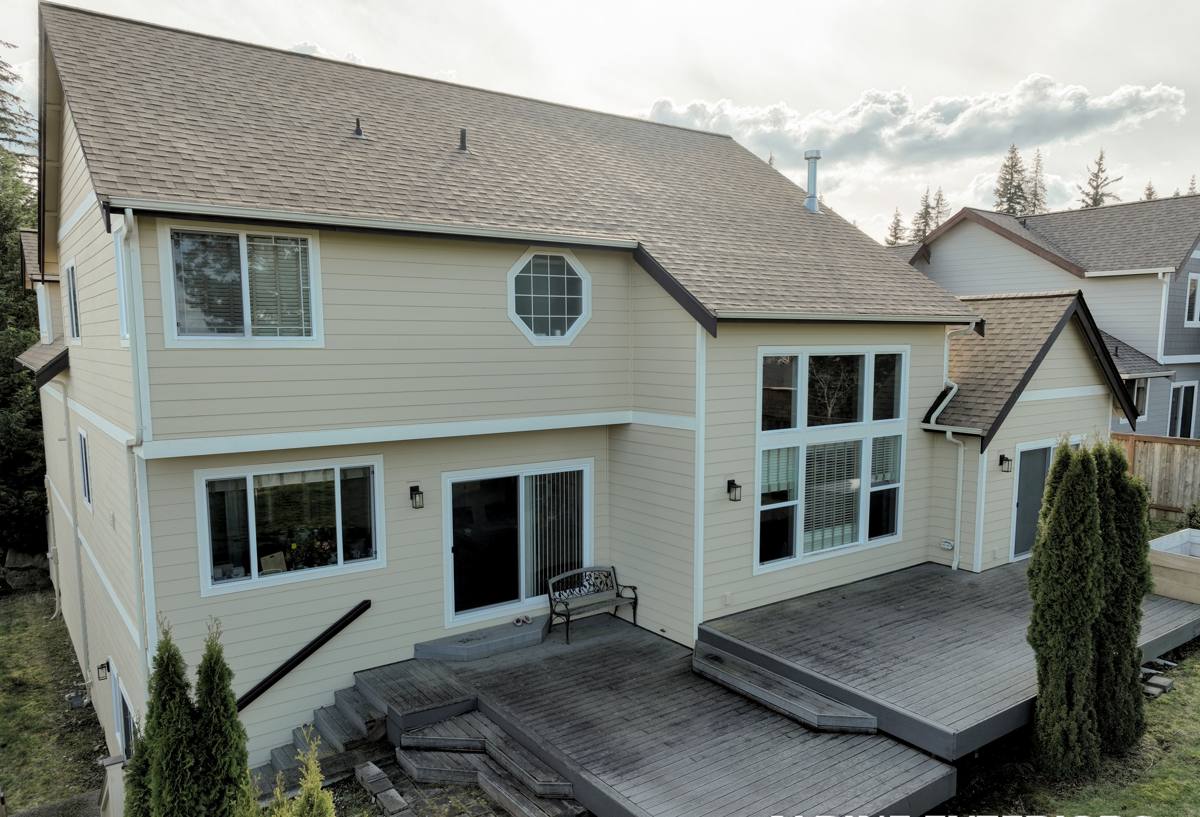
Why Decks in This Part of Bellingham Wear Out Faster
Three things stack up against an aging deck here:
- Shade and moisture retention. Mature trees are one of the things people love about Columbia, but they also block sun and airflow, so decking boards, joists, and ledger connections stay wet longer after every rain.
- A long moss season. Western Washington's wet months stretch from fall through spring. Moss and algae take hold on horizontal wood surfaces and in the gaps between boards, holding moisture against the wood and making the deck surface slick and dangerous underfoot.
- Salt air corrosion. Proximity to Bellingham Bay means airborne salt reaches structures even a mile or more inland. Over years, it eats away at cheap fasteners, exposed nail heads, and low-grade hardware faster than most homeowners expect — often before the visible wood looks all that bad.
Individually, none of these is dramatic. Together, over ten or fifteen years, they're exactly why decks that look fine from a distance can have serious problems underneath.
Signs Your Deck Needs Replacement, Not Just Repair
Repair makes sense when the damage is isolated. Replacement makes sense when the structure itself is compromised. Here's how to tell which situation you're in:
- Soft, spongy, or spring-back decking boards — especially near the house or in shaded corners
- Rust streaks running down from screw or nail heads
- A ledger board (where the deck attaches to the house) that's dark, swollen, or separating from the siding
- Wobble in the railing posts when you push on them
- Visible gaps opening up between joists and beams
- Persistent moss or black staining that comes back within weeks of cleaning
- A musty smell coming from underneath the deck
- Structural posts sitting directly on soil or a cracked footing rather than a proper concrete base
One or two of these on their own might be fixable. Several at once, especially involving the ledger board or support posts, usually means the deck has reached the point where patching isn't a real fix — it's a delay.
What a Correct Deck Replacement Actually Involves
A deck replacement done right is a structural project, not a cosmetic one. The decking boards on top are the least of it. What matters most is everything underneath:
The Ledger and Flashing
Where the deck meets the house is the single most important connection on the whole structure, and it's also the spot most likely to have been done wrong originally. Proper flashing keeps water from getting behind the siding and into the house framing — this is the detail that causes the most expensive hidden damage when it's missing or installed incorrectly.
Footings and Posts
Support posts need to sit on footings that go below the frost line and are sized for the load they're carrying. In older Columbia homes, it's common to find posts resting on undersized pads, or footings that have shifted over the decades.
Joists, Beams, and Hardware
Every joist hanger, structural screw, and bolt should be rated for exterior, corrosion-resistant use — this matters more here than in a drier, inland climate because of the salt air working on metal year-round. We don't cut corners on fasteners; it's the part of the job nobody sees until it fails.
Drainage and Airflow
Board spacing, joist spacing, and any gap under the deck all affect how fast the structure dries out after rain. Given how long the wet season runs here, getting airflow right is what determines whether moss and rot come back in three years or stay away for the life of the deck.
Decking Material Options for This Climate
The right material depends on your budget, how much maintenance you're willing to do, and how much sun versus shade your deck actually gets. Here's an honest comparison for Columbia's conditions:
| Material | Upfront Cost | Maintenance | Moss/Moisture Behavior | Typical Lifespan |
|---|---|---|---|---|
| Pressure-treated wood | Lowest | Annual cleaning, periodic sealing | Absorbs moisture; needs regular treatment to resist moss and rot | 10-15 years |
| Cedar | Moderate | Regular sealing to keep natural rot resistance working | Naturally more rot-resistant than PT wood, but still needs upkeep in shade | 15-20 years |
| Capped composite | Higher | Occasional washing, no sealing or staining | Doesn't absorb water; moss sits on the surface and rinses off more easily | 25-30+ years |
| Uncapped composite | Moderate-High | More cleaning than capped composite | Can absorb some moisture at cut edges; more prone to surface mildew | 15-25 years |
We install both quality wood and composite decking depending on what fits the home and the budget. For heavily shaded, moss-prone lots — which describes a fair number of yards in this neighborhood — capped composite is usually the lowest-maintenance long-term choice, but it costs more up front. A cedar deck kept up with regular sealing still looks and performs great, and plenty of homeowners prefer the natural look and are willing to do the maintenance.
Our Deck Replacement Process
Every deck we replace goes through the same basic sequence, adjusted for the size and condition of your specific structure:
- On-site assessment. We inspect the ledger, framing, posts, and footings — not just the surface boards — to find out what's actually driving the damage.
- Honest scope and estimate. You get a clear picture of what needs full replacement versus what could reasonably be reused, and a straightforward cost range with no pressure to upsell.
- Demolition and disposal. The old deck comes out, including any hidden rot in the framing that wasn't visible from the surface.
- Structural rebuild. New footings, posts, beams, and joists go in to current structural standards, with corrosion-resistant hardware throughout.
- Ledger and flashing correction. This connection gets rebuilt properly, since it's the single biggest source of long-term water damage if it's wrong.
- Decking, railing, and stairs. Installed to your chosen material, with attention to board spacing and drainage.
- Final walkthrough. We go over the finished deck with you and explain what maintenance, if any, it'll need going forward.
Permits and Code Considerations
Most deck replacement projects in Bellingham and unincorporated Whatcom County require a permit, particularly when the deck is elevated, attached to the house, or being rebuilt from the ground up rather than just having boards swapped. Requirements can vary by exact height, footprint, and whether the structure is being reconfigured. We handle the permit process as part of the job so you're not left navigating city requirements on your own, and so the finished deck is inspected and documented correctly — which matters when you eventually sell the house.
What Homeowners Should Check Before Hiring
- Do they inspect the ledger, footings, and framing, or just quote based on square footage of decking?
- Is the estimate written, itemized, and clear about what's included?
- Do they pull permits when the project requires one, or suggest skipping it?
- Are they using corrosion-resistant, exterior-rated fasteners and hardware throughout?
- Can they explain, in plain terms, why they're recommending one decking material over another for your specific lot?
- Do they have experience with the shaded, wet conditions common in this part of Bellingham?
A deck is a big investment to get wrong twice. Asking these questions up front is the cheapest insurance you can buy.
Keeping a New Deck in Good Shape After Replacement
Whatever material you choose, a few habits go a long way in this climate:
- Sweep leaves and debris off the surface regularly, especially in fall when trees are dropping the most
- Rinse or wash the deck a couple of times a year to keep moss and algae from getting established
- Keep gutters and downspouts near the deck clear so runoff isn't draining directly onto it
- Check the ledger flashing and any exposed hardware once a year for early signs of trouble
- For wood decks, re-seal on the schedule recommended for that specific product — skipping years is what shortens lifespan the most
Why a Local Crew Matters for This Job
Deck replacement isn't a job where general contracting experience from a different climate transfers cleanly. A crew that already works Columbia and the surrounding Bellingham neighborhoods knows what driving rain and a long moss season actually do to a structure over time, not just in theory. That shows up in the details — flashing details sized for real rainfall, hardware chosen for salt air rather than a catalog default, and drainage planned around the shade patterns this neighborhood actually has. It also means faster response if something needs a look after the job is done, since we're not driving in from across the county.
If your deck is showing rot, rust, persistent moss, or just doesn't feel solid anymore, we're happy to take a look and give you a straightforward opinion — repair or replace — along with a free, no-pressure estimate using the form below.