 Bellingham Siding
 Blaine Roofs Take a Different Kind of Beating
Blaine sits right on the water at the top of Whatcom County, close enough to the Canadian border and the Strait of Georgia that its roofs deal with a combination of stresses most inland homes never see. Salt-laden air off the water speeds up corrosion on anything metal — fasteners, flashing, vent housings, gutter hardware. Driving rain off Puget Sound and the Strait doesn't just fall straight down; it gets pushed sideways under wind, which means it finds weak points in flashing and underlayment that a calmer climate would never expose. And because so much of the area stays shaded, cool, and damp for long stretches of the year, moss gets a foothold on roofs that would stay clean almost anywhere else.
None of that means a Blaine roof needs anything exotic. It means the details — the fasteners, the flashing metal, the underlayment, the ventilation — have to be right the first time, because this climate finds every shortcut eventually.
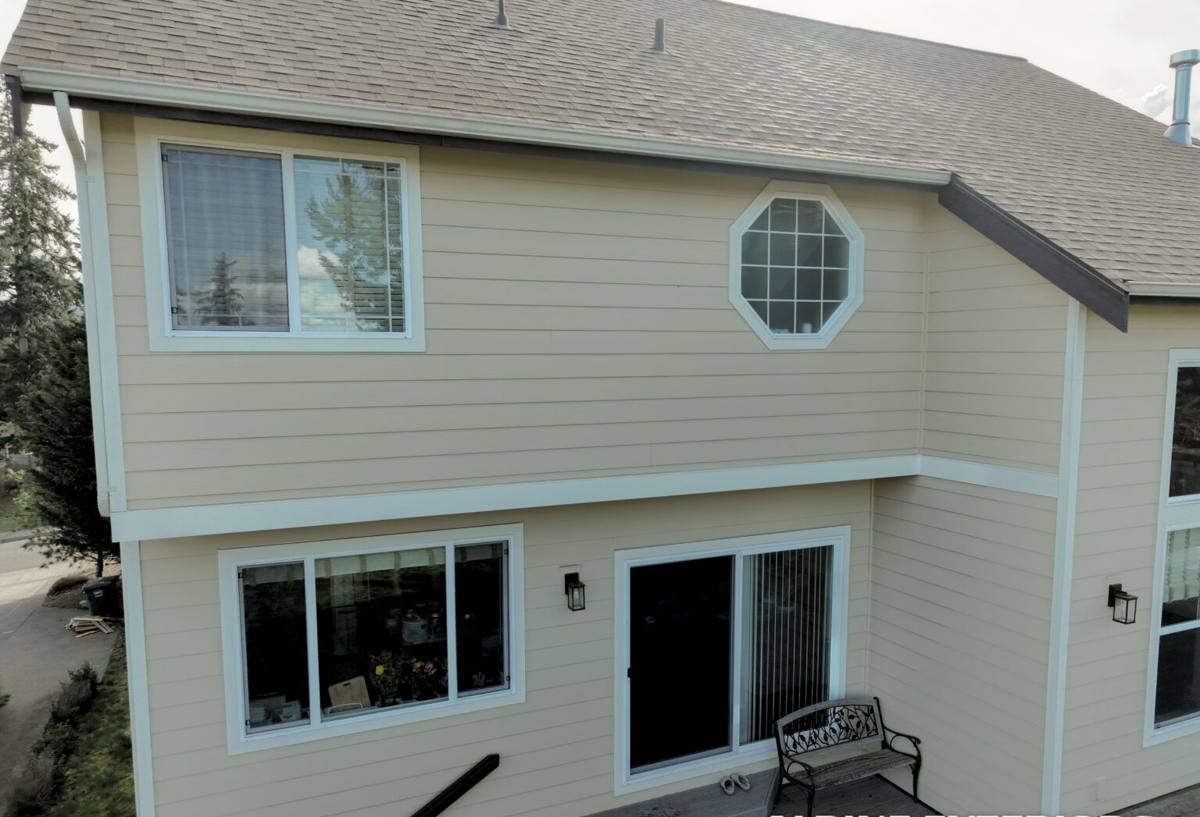
How to Tell a Roof Needs Replacing, Not Just Patching
A lot of roofs get patched two or three times before anyone asks whether patching is still the right call. In a coastal, moss-prone climate like Whatcom County's, that decision point tends to arrive earlier than homeowners expect, because moisture damage under a mat of moss or behind failing flashing isn't always visible from the ground.
- Shingles that are cupping, curling at the edges, or losing granules in handfuls when you run a hand across them
- Moss growing in thick mats rather than light surface staining — mats hold water against the shingle around the clock
- Soft or spongy spots on the decking, felt from inside the attic or noticeable when walking the roof
- Recurring leaks in the same spot after more than one repair attempt
- Daylight visible through the roof deck from inside the attic
- A roof already carrying two layers of shingles, which limits repair options and complicates future work
- Asphalt shingles pushing past the 20–25 year mark, especially on north-facing or shaded slopes that stay wet longer
Any one of these on its own might still be a repair. Two or three together, especially on an older roof, usually means the cost of continued patching starts to outrun the cost of doing it right once.
What a Correct Roof Replacement Actually Involves
A roof replacement is only as good as what's underneath the shingles. New material over a compromised deck or missing underlayment looks fine for a year or two and then fails the same way the old roof did.
Decking and Sheathing
Once the old roofing is stripped, the deck gets inspected board by board. Any wood that's soft, delaminated, or water-stained through gets replaced — not covered over. Skipping this step is the single most common shortcut in the trade, and it's the one that causes soft spots and sagging a few years later.
Underlayment and Water Barriers
In a climate that gets sustained, wind-driven rain, self-adhering ice-and-water shield belongs at the eaves, in the valleys, and around every penetration — not just in the spots code requires it. The rest of the deck gets a synthetic underlayment that holds up to the wet, cool spells common here far better than old-style felt.
Flashing Details
Chimneys, sidewalls, skylights, and any place a lower roof meets a wall are where leaks actually start. Flashing has to be formed and layered correctly with the underlayment and siding, not just caulked and hoped for. Caulk fails; properly lapped flashing doesn't need to.
Ventilation
Balanced intake and exhaust ventilation keeps the attic from trapping moisture, which matters twice over here — it protects the decking from the inside, and a cooler, drier attic slows the conditions moss and algae need to take hold on the shingles above it.
Material Options for a Coastal Whatcom County Home
Most Blaine homes are well served by a quality architectural asphalt shingle, but it's worth understanding how the common options actually compare in this specific climate before deciding.
| Material | Salt-air & corrosion resistance | Moss resistance | Typical lifespan | Relative upfront cost |
|---|---|---|---|---|
| Architectural asphalt shingle | Good — shingle itself doesn't corrode; accessory metal must be chosen carefully | Moderate; benefits from ventilation and periodic cleaning | 25–30 years | Lowest |
| Standing seam metal | Very good if the correct coating/fastener system is used; poor if the wrong metal is chosen for a coastal exposure | Very good — sheds moisture, little for moss to grip | 40–50+ years | Highest |
| Synthetic/composite shingle | Good — resists corrosion inherently | Moderate to good, depending on surface texture | 30–40 years | Mid to high |
We don't push one product on every roof. The right choice depends on the home's exposure to wind and salt spray, the roof's slope and shading, and what the homeowner wants to spend upfront versus over the life of the roof.
Salt Air and Coastal Fasteners — Small Details That Matter
This is the part of a coastal roof replacement that's easy to skip and expensive to ignore. Standard galvanized fasteners and flashing can start showing rust streaks within a few years this close to the water; stainless steel or other corrosion-rated fasteners and flashing metals cost more per piece but hold up for the life of the roof instead of failing early and staining the shingles around them. The same logic applies to any exposed metal — vent stacks, drip edge, valley metal. It's a modest cost difference at install time and a real difference in how the roof looks and performs a decade in.
Moss and Standing Moisture Management
Moss doesn't just sit on a roof — it holds water against the shingle surface long after the rest of the roof has dried, which shortens shingle life and can work its way under tabs over time. North-facing slopes and any area shaded by trees or neighboring structures are the most exposed. Good attic ventilation and a shingle with reasonable algae/moss resistance help slow regrowth, and zinc or copper strips near the ridge can reduce moss on the slopes below them. None of that eliminates the need for periodic roof cleaning — it just stretches out how often it's needed and reduces how aggressively moss comes back.
Our Roof Replacement Process, Start to Finish
- Inspection and estimate — we walk the roof, check the attic, and give a straightforward written estimate with the reasoning behind it.
- Material selection — we go over the realistic options for the home's exposure and budget, no upselling.
- Scheduling and property protection — landscaping, siding, and gutters get protected before tear-off starts.
- Tear-off and deck inspection — old roofing comes off completely; the deck gets inspected and any bad sections replaced.
- Underlayment, ice-and-water shield, and flashing — installed to the standard the site actually needs, not just code minimums.
- Roofing installation — installed to manufacturer spec, with attention to fastening pattern and exposure.
- Ventilation check — intake and exhaust confirmed balanced before we call the job done.
- Cleanup and magnetic sweep — the yard and driveway get swept for stray nails and debris.
- Final walkthrough and warranty paperwork — we go over the finished roof with the homeowner and hand over documentation.
What Roof Replacement Costs Depend On
Every roof is priced on its own specifics, but the factors that move the number are consistent. This isn't a price list — it's a way to understand where the estimate comes from.
| Factor | Why it affects cost |
|---|---|
| Roof pitch and accessibility | Steeper or harder-to-access roofs take longer and require more safety setup |
| Number of existing layers | Tearing off two layers of old shingles takes more labor and disposal than one |
| Decking condition | Rot or soft sheathing found during tear-off adds material and labor to replace it properly |
| Roof complexity | Valleys, dormers, skylights, and multiple chimneys all add flashing work and time |
| Material choice | Asphalt, synthetic, and metal carry different material and labor costs per square |
| Ventilation upgrades | Adding or correcting intake/exhaust vents is worth doing during a replacement, and adds to the scope |
Why Hiring a Crew That Already Works Blaine Matters
A roofing crew that works this stretch of Whatcom County regularly already knows which slopes hold moss the longest, which fastener and flashing specs actually hold up to salt air, and how the weather windows here affect scheduling a tear-off without leaving a roof exposed. That familiarity shows up in fewer surprises during the job and a roof that's built for the conditions it actually faces, not a generic install. It also matters after the job is done — a Bellingham-based crew is a short drive away if a warranty question ever comes up, not a phone number from out of the area.
If your Blaine roof is showing its age or you just want an honest read on where it stands, we're glad to come take a look. Fill out the form below for a free, no-pressure estimate.