 Bellingham Siding
 What Birchwood Homes Need From a Window Installation
Birchwood sits inland enough from Bellingham Bay to feel like it's tucked away from the weather, but the same marine air that rolls in off the water still reaches every part of Whatcom County. Homes here deal with a specific combination of conditions: salt-tinged air that speeds up corrosion on anything metal, driving rain that comes in sideways during winter storms, and a long, wet moss season that can stretch from October through May under the fir and cedar canopy common to this part of Bellingham. A window installation that ignores any one of those three factors tends to show problems within a few years, not decades.
That means the job isn't just about picking a window you like the look of. It's about how that window gets tied into the wall, how water is directed away from the opening, and whether the materials involved can handle sitting in damp, shaded conditions for months at a stretch without drying out fully between rain events.
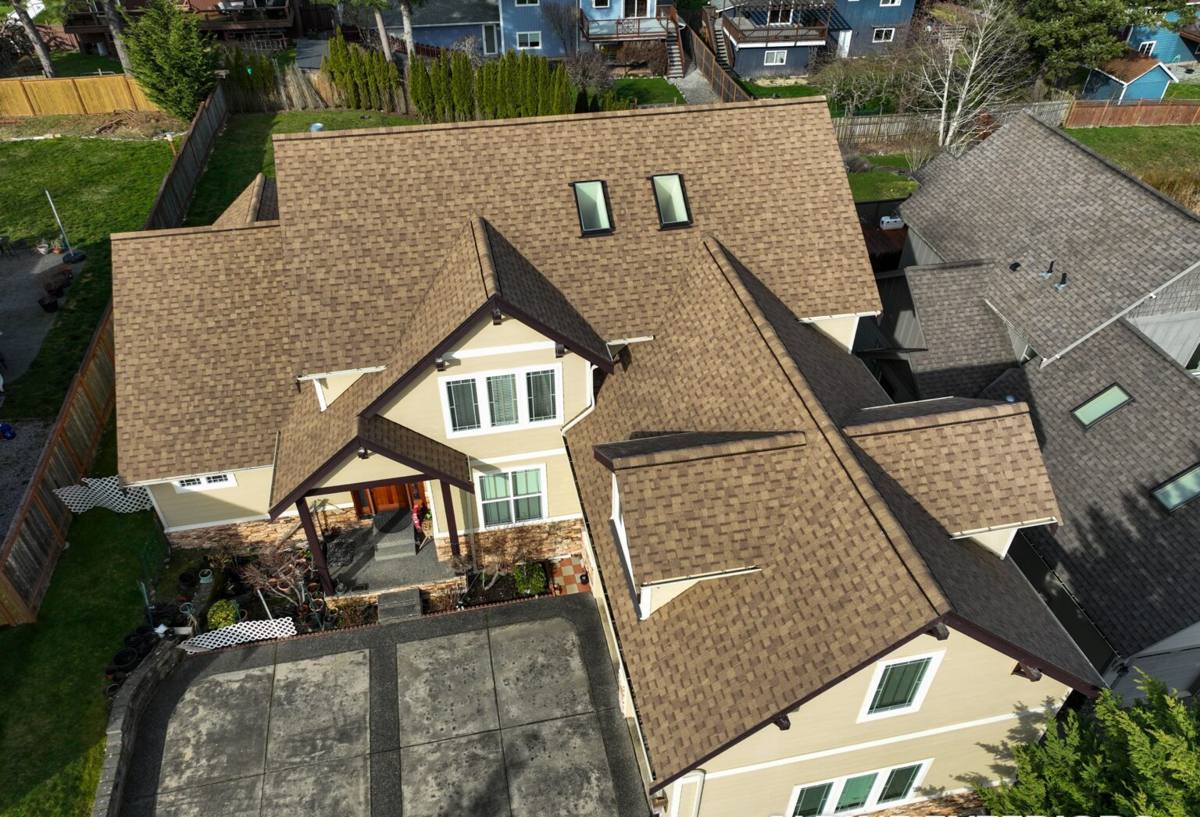
Why Windows Fail Faster in This Climate
Wind-Driven Rain and Flashing Failures
Most window leaks in this area aren't caused by rain falling straight down — they're caused by wind pushing rain sideways and upward against the wall, forcing water past gaps that would never be a problem in a drier climate. If the flashing sequence around a window isn't layered correctly (each piece overlapping the one below it, shingle-style, so water is always directed outward and down), wind-driven rain will find the seam and work its way behind the trim and into the wall cavity.
Salt Air and Hardware Corrosion
Window hardware — hinges, locks, balance mechanisms, and fasteners — takes a beating from salt-laden air even a few miles inland from Bellingham Bay. Lower-grade hardware corrodes, seizes, or discolors well before the glass or frame shows any wear, which is why the hardware spec on a window matters just as much as the frame material.
Moss, Shade, and Trapped Moisture
Birchwood's mature tree cover is part of what makes the neighborhood pleasant to live in, but it also means less direct sun on siding and trim, longer drying times after rain, and moss that establishes itself on window sills, trim boards, and anywhere water sits. Moss holds moisture against wood and paint far longer than open air would, which accelerates rot at exactly the corners and sills where a window installation lives or dies.
What a Correct Window Installation Actually Involves
A window installation is a sequence, and skipping or rushing any step in that sequence is what turns into a callback two winters later. Here's what should happen on every installation, regardless of window brand:
Opening Inspection Before Anything Goes In
Once the old window is out, the rough opening gets inspected for hidden rot, soft framing, or old water staining. This is the point where problems from a previous installation — often the real reason a homeowner is replacing windows in the first place — get caught and repaired before a new window goes in on top of them.
Sill Pan Flashing
A sill pan creates a sloped, waterproof pocket at the bottom of the opening so any water that does get past the window sheds back outside instead of sitting on bare framing. In a climate with this much sustained rain, a sill pan isn't optional — it's the single most important detail in the whole installation.
Integration With the Weather-Resistive Barrier
The window's nailing flange needs to be woven into the house wrap or building paper correctly — flange over the barrier on the sides and bottom, barrier over the flange at the top — so water draining down the wall is directed over the window, not behind it.
Head Flashing
A head flashing above the window sheds water around the top corners, which is one of the highest-stress areas for wind-driven rain intrusion.
Air-Sealing and Insulation
The gap between the window frame and the rough opening gets sealed and insulated properly — not overpacked with expanding foam, which can bow the frame and cause the window to operate poorly, and not left open, which invites drafts and condensation.
Exterior Trim and Sealant
Trim gets reinstalled or replaced, and sealant is applied only where it's supposed to carry the waterproofing load — sealant is a backup layer, not a substitute for correct flashing underneath it.
Choosing a Window Frame Material for a Marine Climate
There's no single "best" window material — the right choice depends on the home's exposure, budget, and how much upkeep the owner wants to take on. Here's how the common options compare specifically for a wet, shaded, salt-air environment like Birchwood's:
| Frame Material | Moisture Resistance | Maintenance | Typical Lifespan Here |
|---|---|---|---|
| Vinyl | Good — won't rot, handles damp shade well | Low; occasional cleaning | 20-30 years |
| Fiberglass | Very good — stable in wet/dry cycling, resists warping | Low | 30+ years |
| Wood-Clad | Depends on cladding integrity; wood core vulnerable if seals fail | Higher; watch cladding seams and interior wood | 20-30 years with upkeep |
| Aluminum | Fair; can corrode near salt air unless properly coated | Moderate; check finish and hardware | 15-25 years in coastal exposure |
We'll talk through these trade-offs honestly during an estimate rather than pushing whatever happens to be in stock — a shaded, moss-prone lot calls for a different conversation than a sunny, exposed one, even within the same neighborhood.
Our Window Installation Process
- On-site assessment — we look at existing window condition, framing, exposure, and any signs of past water intrusion.
- Measurement and product selection — exact sizing plus a frame material and glass package suited to the home's specific exposure.
- Removal and opening prep — old window out, framing inspected and repaired if needed.
- Sill pan and flashing installation — the waterproofing details that do the real work over time.
- Window setting and fastening — leveled, plumbed, and secured per manufacturer spec so warranty coverage stays intact.
- Insulation, trim, and sealant — interior and exterior finish work completed to match the home.
- Final walkthrough — operation check, seal check, and cleanup.
Signs Your Current Windows Are Already Failing
Homeowners in Birchwood often live with early warning signs for a while before calling, mostly because the symptoms show up gradually. Worth checking for:
- Fogging or a milky haze between the panes of double-pane glass (a failed seal, not a cleaning issue)
- Soft, spongy, or discolored trim and sill boards at the exterior
- Persistent moss or dark staining at the bottom corners of the frame
- Noticeable drafts or cold spots near the window even with it fully closed
- Windows that are difficult to open, close, or lock — often a sign the frame has shifted
- Peeling or bubbling paint on interior trim below the sill
- Visible daylight or gaps around the frame from outside
Any one of these on its own isn't necessarily an emergency, but two or more together usually mean water has already found a way in.
Why Hiring a Crew That Already Works Birchwood Matters
A window installation done to a generic spec sheet doesn't account for the fact that a shaded, tree-covered lot in Birchwood dries out differently than an open, sun-exposed property elsewhere in Bellingham. A crew that regularly works this neighborhood already knows the typical construction era and details found in local homes, understands which corners of a house take the worst of the wind-driven rain given the area's exposure, and isn't guessing at how long moss and shade will keep a sill damp after a storm. That familiarity shows up in fewer surprises once the old window comes off the wall — and in flashing and sealing decisions that are matched to how this specific area actually weathers, not a one-size-fits-all approach.
It also matters for permitting and code compliance. Window replacement projects can trigger permit requirements depending on scope, egress considerations, and the jurisdiction — a local crew already knows how that process works for Bellingham and Whatcom County rather than treating every job the same regardless of location.
Maintenance After Installation
A correctly installed window in this climate still needs a little seasonal attention:
- Clear weep holes (the small drainage openings at the base of the frame) if debris or moss builds up
- Rinse accumulated moss and organic debris off sills and adjacent trim before it holds moisture against the surface
- Check exterior sealant lines annually for cracking or separation, especially after a hard winter
- Operate locks and hardware periodically so salt-air corrosion doesn't set in unnoticed on parts that aren't used often
None of this is heavy maintenance, but skipping it in a climate this wet is how small issues turn into wall damage.
If you're noticing any of the warning signs above, or you're simply ready to stop fighting drafty, foggy, or hard-to-operate windows, we're happy to take a look. Reach out for a free, no-pressure estimate — we'll walk the exterior with you, explain what we find in plain terms, and let you know what a correct installation looks like for your specific home.