 Bellingham Siding
 Roofing Built for Birchwood's Coastal Climate
Birchwood sits close enough to Bellingham Bay that homes in this neighborhood deal with a combination of conditions that a lot of inland Washington towns never see together. There's salt-laden air rolling in off the water, wind-driven rain that gets pushed sideways up under shingle tabs and flashing instead of simply running downhill, and a moss season that under Whatcom County's tree cover can stretch across most of the year. Any one of these is manageable with a decent roof. All three at once is what actually shortens a roof's life here, and it's why a roofing job that would hold up fine in a drier part of the state can fail early in Birchwood. Like much of this stretch of the county, Birchwood mixes older homes with newer construction on tree-lined residential streets, and roof age varies a lot from block to block as a result.
Salt air speeds up corrosion on exposed metal — nail heads, flashing, vent stacks, drip edge — long before the shingles themselves show real wear. Driving rain finds every shortcut in an installation: an under-lapped step flashing, a fastener pattern with gaps, a valley that wasn't formed deep enough. And moss doesn't just sit on top of a roof looking bad; it holds moisture against the shingle surface and works its way under the tabs, lifting them just enough to give the wind something to grab during the next storm.
We size, flash, and ventilate roofs for this part of Bellingham with all three factors in mind every time, because the climate here doesn't leave much room for shortcuts.
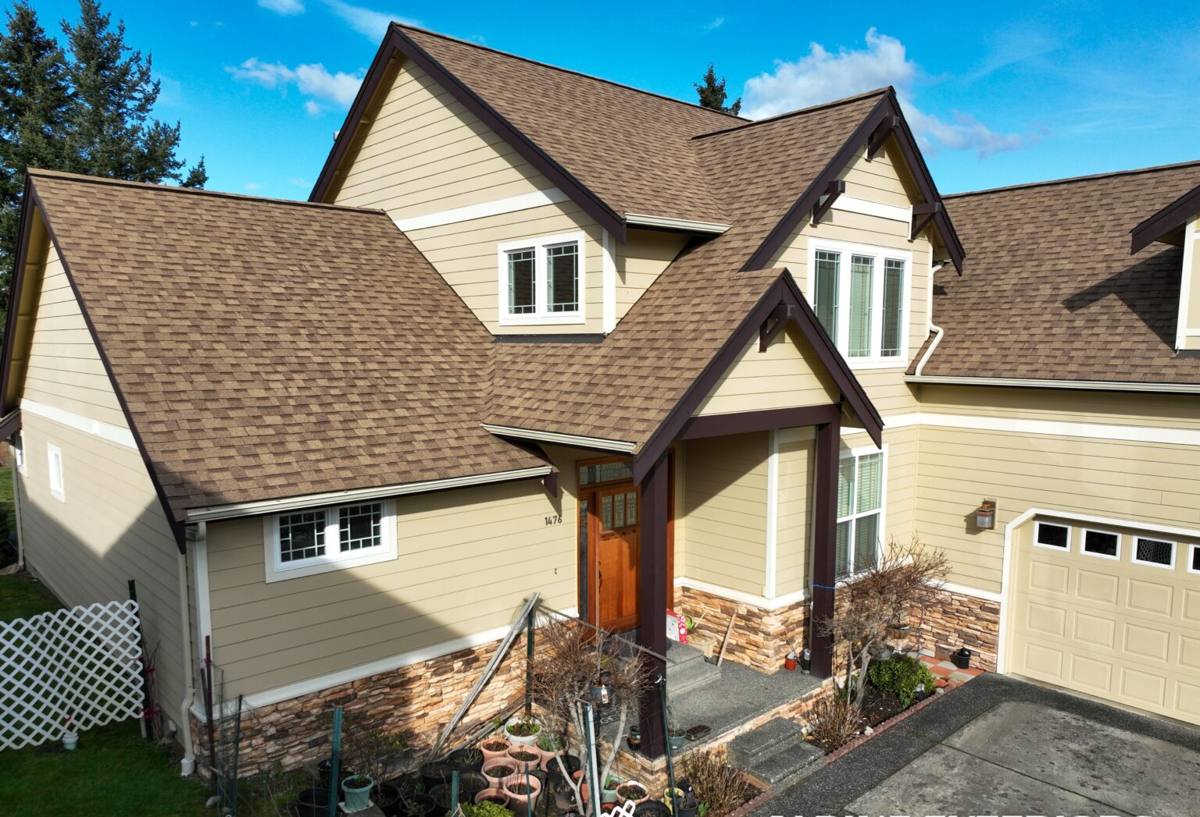
What a Correct Asphalt Shingle Installation Actually Involves
Underlayment and Water Barrier
A synthetic underlayment goes down as the primary secondary water barrier across the whole roof, with self-adhered ice-and-water shield at the eaves, valleys, and around every penetration. Bellingham's marine climate rarely produces the kind of ice damming you'd see further inland or at elevation, but that same underlayment does real work here against wind-driven rain, which can push water uphill under shingles at exactly those vulnerable spots.
Flashing Details
Step flashing goes in at every course where a roof plane meets a wall or chimney — not a single strip of "shingle-over" flashing bent to look like it's doing the job. Counter-flashing gets tucked properly rather than caulked over. On any roof getting a full tear-off, valley metal and pipe boots are replaced new rather than reused, since these are the parts that fail first in salt air and driving rain.
Fastening and Edges
Nail count and placement follow the manufacturer's spec for the shingle and the site's wind exposure, typically four to six nails per shingle. Fastener quality matters more here than in a dry inland town — hot-dip galvanized or better is worth the small added cost when the alternative is corroding nail heads a few years into the roof's life. A metal drip edge at eaves and rakes, along with a proper starter course, closes off the two spots wind-driven rain is most likely to find on an otherwise well-built roof.
Choosing a Shingle That Can Handle Whatcom County Weather
Not every asphalt shingle is built for salt air and a long moss season. The table below is a general guide to how the common categories compare for a Birchwood roof — your actual best fit depends on the slope, sun exposure, and tree cover on your specific lot.
| Shingle Type | Typical Lifespan | Algae/Moss Resistance | Wind Rating | Best Fit for Birchwood |
|---|---|---|---|---|
| 3-Tab Standard | 15-20 years | Low unless algae-resistant granules are specified | Lower, typically rated to 60-70 mph | Simple, low-slope sections on a tight budget |
| Architectural/Dimensional | 25-30+ years | Moderate to good with algae-resistant granule options | Higher, many products rated 110-130 mph | Most Birchwood homes, especially shaded or bay-facing lots |
| Impact-Resistant (Class 4) | 25-30+ years, often with a stronger wear warranty | Good, usually paired with algae-resistant granules | High | Homes wanting longer maintenance intervals; ask your insurer about a possible discount |
Most major manufacturers now offer an algae-resistant line that mixes copper or other metal compounds into the granules, which slows the growth that causes those dark streaks and green-black staining. On a shaded Birchwood lot, that upgrade tends to pay for itself in fewer cleanings and a better-looking roof for longer. Color matters too — darker shingles hide streaking longer between cleanings, while lighter colors show it sooner but run a little cooler in summer sun.
Ventilation and Moisture — the Part You Don't See
A roof that's flashed and shingled correctly can still fail early if the attic underneath it can't breathe. Balanced ventilation — enough intake at the soffits and enough exhaust at the ridge — keeps humid indoor air from condensing against the underside of the decking. In a coastal, humid climate like Bellingham's, that trapped moisture shows up as warped sheathing, mildew smell in the attic, and shingles that fail from underneath years before their rated lifespan is up.
On older Birchwood homes, it's common to find soffit vents painted shut, blocked by insulation, or simply never installed to match the exhaust side. Part of a correct re-roof is checking that balance and correcting it, not just laying new shingles over the same airflow problem. It's a quick check during the inspection and a straightforward fix during the tear-off, but it's the kind of thing that gets skipped when a crew is only focused on what's visible from the ground.
Signs a Birchwood Roof Needs Attention
- Moss visible on north-facing slopes or anywhere under tree cover, even if the rest of the roof looks fine
- Granules collecting in the gutters or piling up where a downspout discharges
- Shingle tabs that look cupped or curled at the edges instead of lying flat
- Dark streaking that comes back within a season or two of being cleaned
- Soft spots or a noticeable dip when the roof is walked by a professional
- Daylight, water stains, or a musty smell in the attic near valleys or the chimney
- Flashing that looks rusted, lifted, or has been patched with caulk instead of properly re-formed
Any one of these on its own is worth a look. More than one usually means the roof is further along than it appears from the ground.
Our Process, Start to Finish
The process is the same for every Birchwood roof, whether it's a simple overlay-eligible job or a full tear-off:
- Free on-site inspection, including a look in the attic at decking and ventilation, not just a walk around the yard
- A written recommendation covering shingle type, flashing scope, and any decking or ventilation repairs needed
- Full removal of old roofing material and disposal, with the decking checked and repaired as it's exposed
- New underlayment, ice-and-water shield at vulnerable areas, and all-new flashing and pipe boots
- Shingle installation to manufacturer spec, followed by ridge and soffit ventilation work where needed
- A magnetic sweep of the yard and driveway for stray fasteners, then a final walk-through with you before we consider the job done
We also handle manufacturer warranty registration where one applies, so the paperwork is on file rather than left for you to track down later if you ever need it.
Cost Factors for a Birchwood Re-Roof
Every roof is different, but the following factors are what typically move the price on a Birchwood job:
| Factor | Why It Matters Here |
|---|---|
| Roof pitch and access | Steeper roofs and tighter lot access, common on older residential streets in this part of Bellingham, add labor time |
| Number of existing layers | Tearing off two layers of old shingles takes longer and often uncovers decking issues sooner |
| Decking condition | Coastal moisture makes rot around valleys and eaves more common here than in drier inland areas of Whatcom County |
| Ventilation upgrades | Adding proper intake and exhaust venting where none exists is a frequent need on older homes in the area |
| Flashing scope | Full flashing replacement costs more upfront than reusing old metal but eliminates the most common source of leaks |
Maintenance That Actually Extends Roof Life Here
A correctly installed roof still benefits from a bit of upkeep in this climate. Debris and needle buildup from the mix of evergreen and deciduous trees around Birchwood should be cleared gently — a soft brush or low-pressure rinse, never a pressure washer, which can strip granules and shorten shingle life. Moss is best treated with a soft-wash approach rather than scraped, since scraping tends to lift granules along with the moss.
Gutters deserve attention going into fall, when leaf and needle drop is heaviest and driving rain is most likely to overwhelm a clogged system. An annual look at the roof before the wetter months set in — checking flashing, vents, and any spots where moss has started to build back up — catches most problems while they're still small and cheap to fix.
Why a Crew That Already Works Birchwood Matters
A roofer who works this neighborhood regularly already knows the typical house ages and roof pitches you'll find here, which shingle lines actually hold up to salt air and shade rather than just the ones with the best marketing, and how to schedule tear-offs around Bellingham's wetter stretches so a roof isn't left exposed longer than it has to be. That familiarity also means fewer surprises with the City of Bellingham's permitting process and less time spent waiting on materials from suppliers we already have working relationships with. It also means we can plan around the neighborhood's tree cover and typical shade patterns instead of guessing at what a given roof will face once the leaves are down and the wet season sets in.
None of that replaces a careful, correct installation — but it does mean fewer assumptions and fewer avoidable mistakes on a roof that has to hold up to everything this part of Whatcom County throws at it.
If your Birchwood roof is showing any of the signs above, or you'd just like an honest read on how much life is left in it, we're happy to take a look. The estimate is free, there's no pressure, and you'll get a straight answer either way — just fill out the form below to get started.