 Bellingham Siding
 Birch Bay Siding Takes a Different Kind of Beating
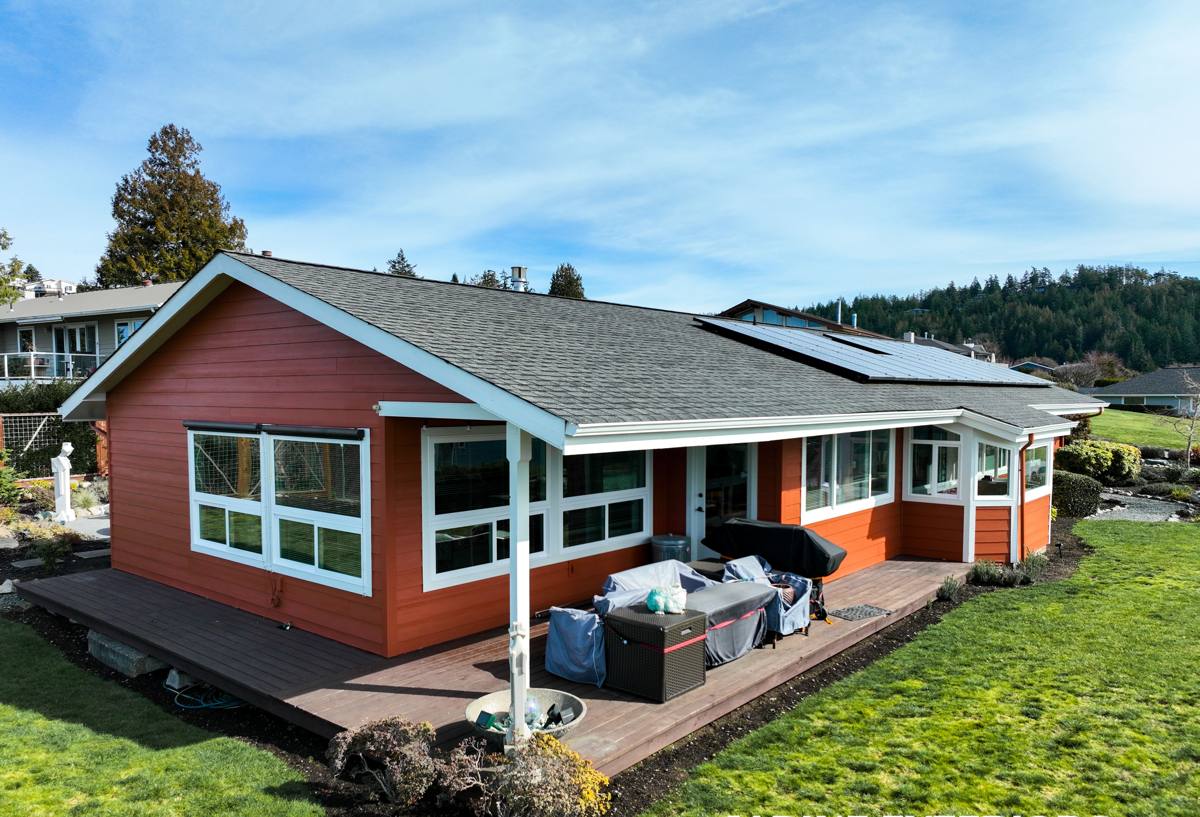
Birch Bay sits right on the water, and that changes what siding repair means here compared to a house a few miles inland in Bellingham or Ferndale. You've got salt-laden air coming off the bay, wind-driven rain that hits gable ends and window trim at an angle instead of straight down, and a moss and algae season that stretches from fall through spring in Whatcom County's marine climate. None of that is dramatic on its own. It's the accumulation, year after year, that turns a small problem into a section of wall that needs real work.
We work on homes throughout Birch Bay and the surrounding coastal stretch of the county, and the repair calls we get out here tend to follow a pattern: fasteners and trim that corroded faster than they should have, moisture that got behind the siding at a joint or penetration and stayed there, and moss or algae holding dampness against the wall long enough to soften what's underneath. None of that is unique to this neighborhood, but the pace at which it shows up is.
What Salt Air Actually Does to Siding Over Time
Salt air isn't corrosive in the dramatic, overnight sense — it's corrosive the way constant low-level exposure always is. Airborne salt settles on siding, trim, and especially on exposed metal fasteners and flashing. Combined with the region's humidity, it accelerates rust and corrosion on anything that isn't rated for coastal exposure. On a lot of older homes near the bay, you'll find the actual siding panels holding up reasonably well while the fasteners, trim nails, or flashing underneath have failed first — and that failure is what let water in.
This is why a repair that only addresses the visible crack or gap, without checking what's holding the panel to the wall, often doesn't last. A proper Birch Bay repair means looking past the cosmetic damage to the hardware and flashing behind it.
Driving Rain and the Problem of Wind-Driven Moisture
Whatcom County gets a lot of rain, but Birch Bay's exposure to wind off the water means that rain doesn't always fall straight down — it gets pushed sideways into wall assemblies, corner joints, window and door trim, and anywhere siding meets a penetration. Standard lap siding is designed to shed water moving downward. Wind-driven rain challenges that design at every horizontal joint and every place caulk or flashing has started to fail.
The result is a specific pattern of damage: staining or softness near window headers, warped or delaminated trim boards, and moisture tracking down inside the wall from a failure point well above where the damage shows up outside. This is one of the most common mistakes in DIY or rushed siding repair — patching where the stain appears instead of tracing the water back to where it's actually getting in.
Moss, Algae, and the Long Wet Season
Birch Bay's moss season isn't a few weeks — in a typical year it's most of the fall, winter, and spring, driven by consistent moisture, mild temperatures, and shaded north- and east-facing walls that don't get enough sun to dry out between rain events. Moss and algae growth on siding is partly cosmetic, but it's also functional: a mat of moss holds water against the surface far longer than open air would, which matters most for wood-based siding products and for any siding where caulk, paint film, or factory finish has already started to break down.
On homes with wood, primed spruce, or lower-grade composite siding, we regularly see soft, spongy panel sections directly behind heavy moss growth — even where the moss itself looks like a surface issue. Removing the growth is only half the fix; the panel underneath needs to be evaluated for moisture damage before anyone repaints or recaulks over it.
Signs Your Siding Needs a Repair Call
Most homeowners don't need to climb a ladder to know something's off — the signs are visible from the ground if you know what to look for.
- Soft or spongy spots when you press on a panel, especially near the bottom courses or under windows
- Visible gaps, cracks, or separation at siding joints and corners
- Paint that's bubbling, peeling, or failing in a localized area rather than uniformly across the wall
- Persistent moss or algae staining that comes back quickly after cleaning
- Rust streaks running down from fasteners, trim, or flashing
- Warped, bowed, or visibly swollen boards, particularly near window and door trim
- A musty smell or visible staining on interior walls that back up to exterior siding
- Woodpecker damage or insect activity, which often signals softened material underneath
Any one of these on its own might be minor. Two or three showing up in the same area of the house usually means water has been getting behind the siding for a while.
What a Correct Repair Actually Involves
A repair that holds up in this climate isn't just about matching the new piece to the old one. It has a specific order of operations, and skipping steps is how the same spot ends up needing repair again in two or three years.
1. Find the actual entry point
Visible damage and the source of moisture intrusion aren't always in the same spot — water runs downhill inside a wall before it shows up as a stain. We trace the path back to the actual failure: a cracked caulk joint, a flashing gap, a fastener that's backed out or corroded through.
2. Remove and inspect, don't just patch over
Damaged panels come off so we can see the sheathing and house wrap underneath. If there's rot, soft framing, or failed weather barrier behind the siding, that gets addressed before anything new goes back up — patching over a wet wall just seals the problem in.
3. Repair the water management, not just the surface
Flashing, house wrap, and caulking at joints and penetrations get corrected as part of the repair. This is the step that determines whether the fix lasts five years or fifteen.
4. Match materials correctly
New panels need to match the existing siding in profile, exposure, and finish as closely as possible — especially on painted or factory-finished siding, where a mismatched patch is obvious from the street.
5. Use fasteners and flashing rated for coastal exposure
Given what salt air does to standard hardware, repairs near the bay should go back together with corrosion-resistant fasteners and flashing, not whatever happens to be in the truck.
Repair vs. Replace: How We Help You Decide
Not every damaged section needs a full re-side, and not every homeowner needs to hear "you should replace the whole thing" from a contractor with an incentive to sell a bigger job. Here's how we actually think through it.
| Factor | Repair usually makes sense | Replacement should be considered |
|---|---|---|
| Extent of damage | Isolated to one wall or a few sections | Recurring or widespread across multiple walls |
| Underlying material | Sound siding, isolated failure point | Siding material itself is failing (delamination, chronic rot) |
| Age of siding | Well within expected service life | Near or past the end of its realistic lifespan |
| Water management | Flashing and house wrap intact once repaired | House wrap or flashing failing broadly, not just locally |
| Cosmetic match | New panels blend acceptably with existing siding | Discontinued profile or faded finish makes matching impossible |
We'll tell you honestly which category your house falls into. Sometimes that means a repair estimate instead of a replacement pitch — that's the right call for the homeowner even when it's the smaller job for us.
Why the Siding Material Matters When You're Repairing, Too
We only install James Hardie fiber cement siding, and that standard applies to repair work as well as full replacements. When we're patching into existing Hardie siding, we're working with a non-combustible, engineered material with a factory ColorPlus finish designed to hold color and resist the exact conditions Birch Bay throws at it — moisture cycling, UV, and salt exposure. Repairs blend in cleanly and hold up the same way the original installation does.
When we're called to repair vinyl, LP SmartSide, primed spruce, cedar, or other fiber cement brands, we'll still do the work and do it right — but we'll also give you an honest read on what we're seeing. Engineered wood products can be more vulnerable to moisture intrusion at damaged or unsealed edges. Vinyl can become brittle and prone to further cracking in cold, salt-exposed conditions. Cedar and primed wood need consistent maintenance to resist the rot pressure that moss season creates, and a repair patch is only as good as the paint and caulk maintenance that follows it. None of that means those products are bad — it means they carry maintenance and moisture trade-offs that our own standard, Hardie, was chosen specifically to avoid on the homes we build and repair long-term.
Our Repair Process
- On-site assessment where we physically check suspect areas, not just look from the ground
- Honest scope: what's cosmetic, what's structural, and what's water management
- Written estimate covering material, labor, and what happens if we find hidden damage once panels come off
- Removal and inspection of framing and weather barrier before any new material goes up
- Repair of flashing, house wrap, and fastening — not just the visible siding
- Installation of matched or replacement panels, finished to blend with the surrounding siding
- Final walkthrough so you know exactly what was fixed and why
Why It Matters That We Already Work in Birch Bay
A crew that mainly works inland doesn't always think about coastal fastener corrosion, salt exposure on trim, or the wind direction that pushes rain into a specific wall in Birch Bay's exposure. We work this stretch of the coast regularly, which means we're not guessing at what causes damage out here — we're seeing the same failure patterns repeatedly and repairing them the way that actually holds up against another Whatcom County winter. That local pattern-recognition is worth more than it sounds like on paper; it's the difference between a repair that gets it right the first time and one that needs a follow-up call in two years.
Get an Honest Look at What's Going On
If you're seeing soft spots, staining, moss that keeps coming back, or gaps opening up at your siding joints, it's worth having someone look before the next round of driving rain finds its way further in. We offer free, no-pressure estimates on siding repair for Birch Bay homes — we'll tell you straight whether it's a targeted repair or something bigger, and why.