 Bellingham Siding
 Birch Bay's Shoreline Climate Is Hard on Exterior Walls
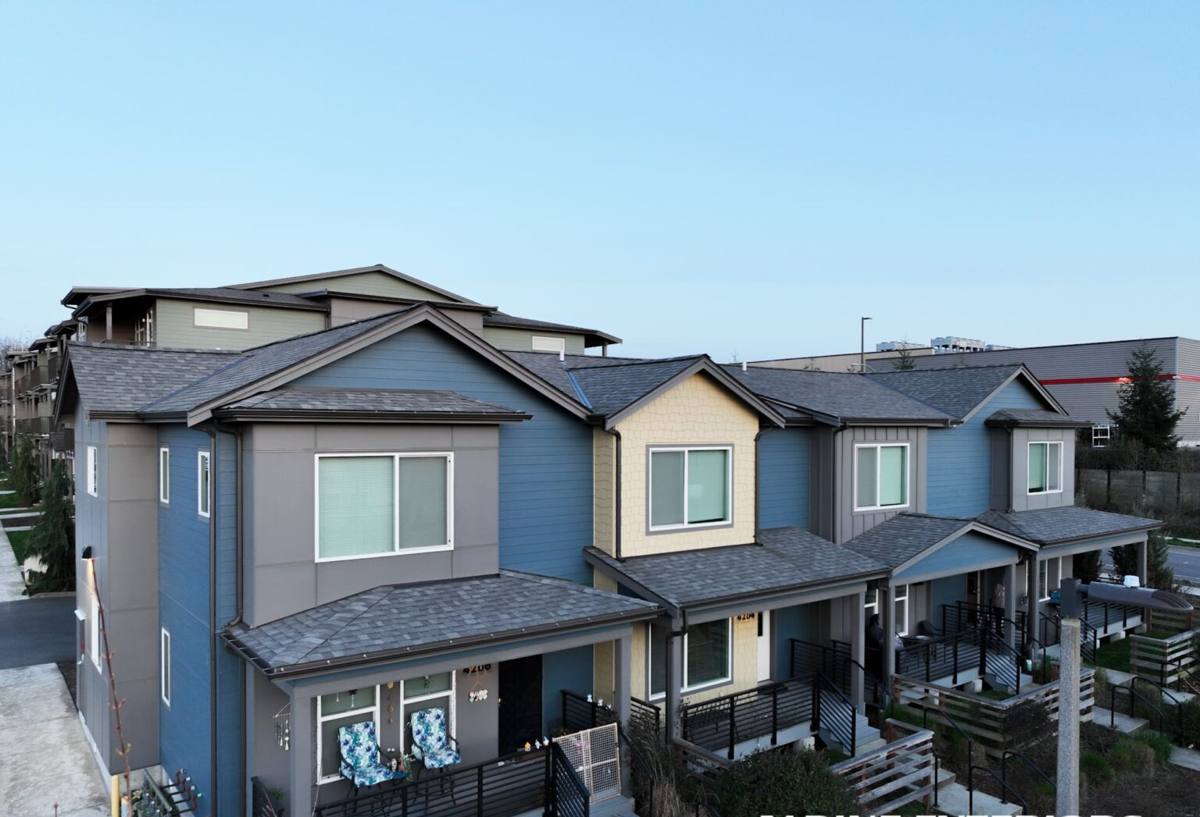
Birch Bay sits right on the water, and that proximity changes what a home's siding has to deal with compared to a house a few miles inland in Bellingham or elsewhere in Whatcom County. Wind comes off the water with more force and carries salt spray onto exterior walls. Rain doesn't just fall straight down here — it gets driven sideways into seams, laps, and trim. And because so many lots are shaded by mature evergreens or sit on the damp, north-facing side of a slope, moss and algae have a long growing season with very little dry-out time between rain events.
None of that is unique to Birch Bay in isolation — it's part of what makes siding work throughout this stretch of the Pacific Northwest coast more demanding than it looks. But a waterfront or near-waterfront property takes the full combination at once: salt exposure, wind load, and moisture, month after month. Siding that would hold up fine on a dry, inland lot can fail years early here if it wasn't chosen or installed with that exposure in mind.
What Salt Air, Wind, and Moss Actually Do to a Wall System
Salt air and corrosion
Airborne salt doesn't just sit on the surface of siding — it works into fasteners, trim joints, and any exposed metal. Over years, that accelerates corrosion in anything that isn't rated for coastal exposure: cheap fasteners, unprotected flashing, and low-grade trim hardware. Once a fastener starts to corrode, it loses holding strength and can telegraph a rust stain right through the face of the siding.
Wind-driven rain and moisture intrusion
Wind off the water pushes rain into places it wouldn't reach in calmer conditions — behind loose laps, into poorly sealed trim joints, around windows and doors. If the water-resistive barrier behind the siding, the flashing details, and the drainage plane aren't done correctly, that moisture finds its way to the sheathing. Once it's in the wall, it doesn't dry out quickly in a climate that stays damp for most of the year.
Moss, algae, and shaded walls
Whatcom County's long wet season means moss and algae get a real foothold on any wall that stays damp and shaded — typically north- and east-facing walls, or anywhere overhangs and landscaping block sun and airflow. Beyond the cosmetic issue, sustained moss growth holds moisture against the siding surface, which shortens the life of paint finishes and can contribute to rot at the substrate if it's allowed to build up for years unaddressed.
Why We Only Install James Hardie Fiber Cement in This Kind of Exposure
We install exclusively James Hardie fiber cement siding, and Birch Bay is a good example of why. Hardie's fiber cement is non-combustible and dimensionally stable — it doesn't swell, warp, or rot the way wood-based products can when they take on repeated moisture. That matters directly here: a material that handles wetting and drying cycles without moving is a material that keeps its seams tight against wind-driven rain year after year.
James Hardie also engineers specific product formulations for different climate zones, with versions built for regions like ours that see sustained moisture and freeze-thaw swings rather than sustained heat and humidity. That's a meaningfully different set of stresses than what a product engineered for a hot, dry climate is built to handle, and it's part of why we don't treat siding as a one-size-fits-all product.
The factory-applied ColorPlus finish is another piece of this. Because the color and top coat are baked on in a controlled factory process rather than sprayed or brushed on site, the finish holds up more consistently against UV, salt exposure, and the kind of grime that collects on coastal homes — and it means no field-painting step where weather conditions or shortcuts can compromise the finish before it's even had a chance to cure.
We'll be straightforward: Hardie fiber cement costs more up front than vinyl and generally more than engineered wood products. For a Birch Bay property taking this much weather, we think that's the right trade to make. It's a decision about what we're willing to put our name behind, not a claim that every other product is worthless everywhere.
What a Correct Siding Installation Actually Involves
The material is only half the equation. A lot of siding failures that get blamed on the product are actually installation failures — and on a coastal property, there's less room for those mistakes to go unnoticed.
- Full tear-off of the old siding so the sheathing and framing underneath can actually be inspected, not just siding installed over hidden damage
- Repair of any rotted sheathing or framing found during tear-off, before anything new goes up
- A continuous, correctly lapped water-resistive barrier behind the siding
- Proper flashing at every window, door, deck ledger, and roof-to-wall intersection
- A rain screen gap (furring strips or a drainage mat) so any moisture that does get behind the siding can drain and the wall can dry rather than staying saturated
- Corrosion-resistant fasteners, driven to Hardie's specified pattern and depth — this is one of the most commonly shortcut steps in the trade, and it's the one that matters most near salt water
- Correct joint treatment and caulking at seams, using products rated for exterior, coastal exposure
- Final inspection of trim, corners, and butt joints for tight, weather-tight fit
Skip any one of these steps and you can end up with siding that looks fine at handoff but fails at the seams within a few years — which is exactly the kind of failure that's expensive to diagnose after the fact, because the problem is hidden behind the new siding.
Comparing Siding Options for a Birch Bay Property
| Factor | James Hardie Fiber Cement | Vinyl | Engineered Wood (e.g. LP SmartSide) |
|---|---|---|---|
| Salt air / corrosion resistance | Strong — cement-based, non-organic material | Can become brittle and discolor with prolonged UV/salt exposure | Wood-based; more vulnerable if moisture reaches the substrate |
| Wind-driven rain performance | Stable panels hold tight seams when installed correctly | Can flex, rattle, or loosen in sustained high wind | Depends heavily on sealing and maintenance |
| Moss/algae resistance | Factory finish resists staining; surface doesn't feed organic growth | Can host mildew and algae in shaded, damp areas | Wood-based surface can be more susceptible over time |
| Fire resistance | Non-combustible | Combustible | Combustible (wood-based core) |
| Finish maintenance | Factory ColorPlus finish, no field painting needed for many years | Color molded in, but fades and chalks with age | Requires field-applied paint and ongoing upkeep |
| Upfront cost | Higher | Lowest | Mid-range |
Every one of these products has a legitimate place somewhere in the market. For a Birch Bay home taking direct wind, salt, and moisture, we've made the professional call that fiber cement is the material we're willing to warranty and stand behind.
How Our Process Works
Assessment and quote
We walk the exterior, look at current siding condition, note problem areas (shaded walls with moss, wind-exposed corners, any visible water staining), and put together a written scope and quote before any work starts.
Prep and tear-off
Old siding comes off, sheathing gets inspected, and any rot or damage gets repaired and documented before we move forward — no covering up a problem with new siding.
Weather barrier and rain screen
We install the water-resistive barrier, flashing, and drainage gap correctly the first time, since this is the layer that actually protects the wall long after the siding is up.
Hardie installation
Panels or lap siding go up to manufacturer fastening specs, with corrosion-resistant fasteners appropriate for a coastal setting.
Final walkthrough
We go over the finished job with the homeowner, check trim and joint details, and make sure everything is sealed and tight before we call it done.
What to Look For When Hiring a Contractor Near the Water
- Ask whether they do a full tear-off or install over existing siding — tear-off is the only way to catch hidden sheathing damage
- Ask what fastener type and pattern they use, and whether it's rated for coastal/salt exposure
- Ask how they handle flashing at windows, doors, and roof lines specifically, not just siding panels
- Ask whether they install a rain screen or drainage gap, especially on shaded or wind-exposed walls
- Ask which siding manufacturer and product line they use, and why — a contractor who installs multiple competing products and can't explain the trade-offs between them hasn't necessarily thought it through for your specific exposure
- Ask about warranty coverage on both the material and the labor
Cost Factors for a Birch Bay Siding Project
Every home is different, but the same handful of factors tend to drive cost on projects in this area: the total wall area and home shape (corners, dormers, and trim detail all add labor), how much of the existing sheathing needs repair once old siding comes off, site access on steep or waterfront lots, and whether the project includes trim, fascia, or related exterior work alongside the siding itself. We'll walk your home and give you a specific, written number rather than a rough estimate pulled from a general price-per-square-foot figure — coastal exposure and prior water damage can change that number more than square footage alone.
If you're weighing a siding replacement on a Birch Bay home, we're happy to come take a look, walk you through what we're seeing, and put together a straightforward, no-pressure estimate — no obligation, just a clear picture of what your home actually needs.