 Bellingham Siding
 Roofing on Birch Bay's Waterfront Is a Different Job Than Roofing Inland
Birch Bay sits right on the water, and that changes what a roof has to survive year after year. A shingle roof a few miles inland in Whatcom County deals with rain and the occasional windstorm. A roof in Birch Bay deals with all of that plus salt-laden air coming off the water, wind-driven rain that hits the field of the roof at an angle instead of falling straight down, and a shade-and-moisture combination that keeps moss and algae active for most of the year. None of that means asphalt shingles are the wrong choice for this area — they're not — but it does mean the details of the installation matter more here than they would somewhere drier and further from the coast.
This page covers what we actually pay attention to when we're doing asphalt shingle roofing on a Birch Bay home: the climate factors that shorten a roof's life if they're ignored, what a correct installation looks like in this environment, and what our process is when we take on a job in this neighborhood.
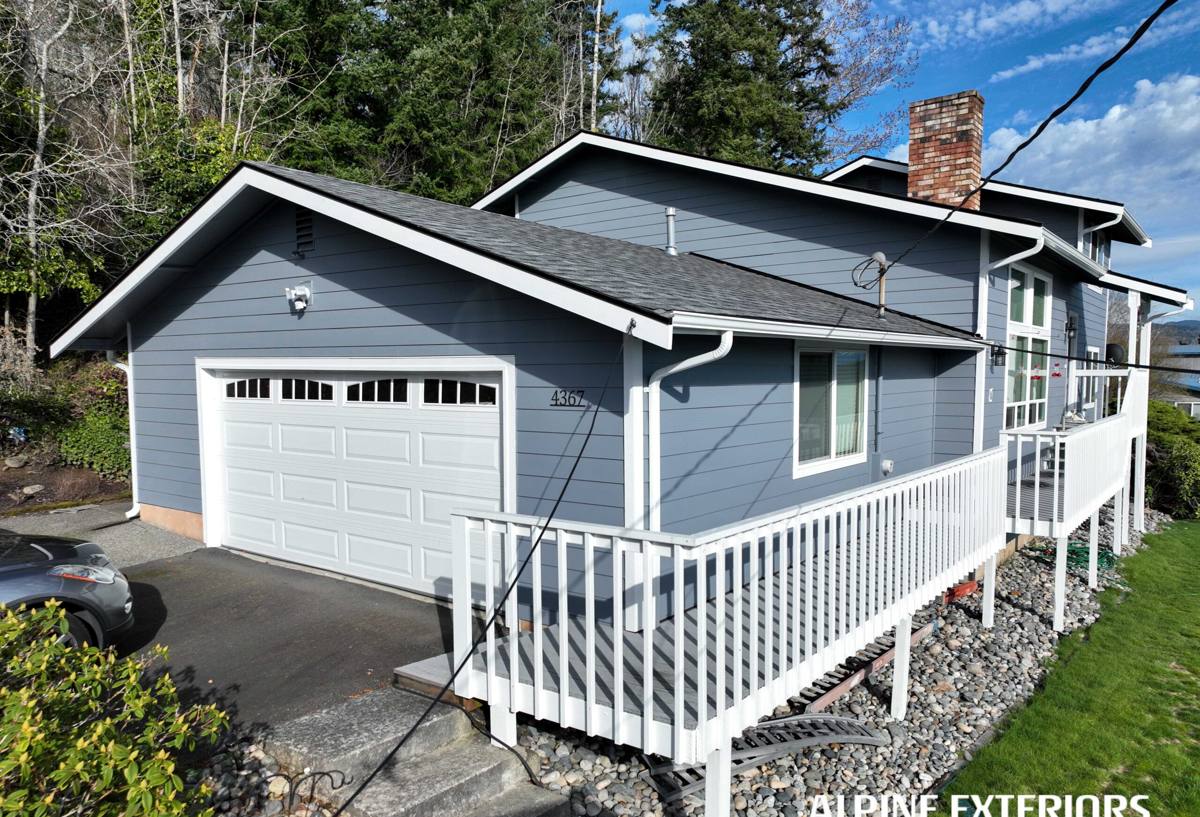
What Birch Bay's Climate Does to a Shingle Roof Over Time
Salt Air and Metal Fatigue
Salt in the air accelerates corrosion on anything metal — flashing, fasteners, vent boots with metal collars, gutter hardware. On a roof that's a few miles from open water, that corrosion happens faster than most homeowners expect. A fastener that would hold for decades inland can start showing rust streaks or weakening well before the shingles themselves are due for replacement. This is one of the biggest reasons material selection and flashing detail work matter more out here than in a typical inland Whatcom County install.
Driving Rain, Not Just Rain
Bellingham and the surrounding coastline get a lot of rain, but Birch Bay's exposure to wind coming off the water means that rain often arrives at an angle instead of falling straight down. Wind-driven rain finds its way into gaps that would never leak in calmer conditions — under shingle tabs, around poorly sealed penetrations, along edges where the underlayment wasn't lapped correctly. A roof built for "regular rain" isn't automatically built for driving rain.
A Long Moss and Algae Season
Moisture that lingers, combined with shaded roof sections under trees, gives moss and algae a long window to establish themselves on a roof in this area — often longer than roofs get in drier parts of the county. Moss isn't just cosmetic. As it grows, it holds moisture against the shingle surface and can lift shingle edges, which is exactly the kind of small opening that wind-driven rain will exploit.
What a Correctly Installed Roof Needs Out Here
A shingle roof is a system, not just a layer of shingles nailed to a deck. In a coastal environment like Birch Bay, every layer of that system earns its keep.
Underlayment and Ice-and-Water Protection
We use synthetic underlayment rated for the exposure the roof will actually see, and we pay particular attention to eaves, valleys, and any low-slope transitions — the areas most likely to take on wind-driven rain or standing water during a heavy storm. These are the spots where a self-adhered ice-and-water membrane earns its cost, even in a climate that sees more rain than ice.
Flashing and Fastening
Because salt air is hard on metal, we pay close attention to flashing material and fastener quality on coastal jobs — corrosion-resistant options at chimneys, walls, valleys, and vent penetrations, installed with correct laps and sealant, not just tucked into place. A roof can have excellent shingles and still fail early if the flashing around a single penetration was cut corners on.
Ventilation
Balanced intake and exhaust ventilation keeps moist air from building up in the attic, which matters in a climate where the air outside is often damp to begin with. Poor ventilation traps moisture against the underside of the roof deck, which can lead to rot and shortens the life of the shingles from underneath — a failure mode that's easy to miss until it's expensive.
Choosing Shingles for a Salt-Air, High-Moss Environment
Not every asphalt shingle is built the same way, and in an environment like Birch Bay's, the difference shows up over time. We generally steer Birch Bay homeowners toward architectural (laminate) shingles with algae-resistant granules, which use copper or zinc content specifically to slow algae and moss growth. Standard three-tab shingles without that protection tend to show streaking and moss growth noticeably sooner in this climate.
| Shingle Type | Typical Lifespan Here | Coastal Fit |
|---|---|---|
| Standard 3-tab, no algae resistance | Shorter end of the manufacturer range | Moss and algae establish faster; least suited to Birch Bay's exposure |
| Architectural laminate, algae-resistant | Full manufacturer range, often better | Better moss/algae resistance, heavier profile handles wind-driven rain better |
| Premium/designer laminate, algae-resistant | Upper end of manufacturer range | Best wind and impact ratings; worth it on highly exposed lots |
We don't push homeowners toward the most expensive option by default — a mid-range architectural shingle with algae resistance is the right call for most Birch Bay homes. Where we do recommend stepping up is on lots with direct, unobstructed exposure to the water and prevailing wind.
Moss, Algae, and Keeping a Roof Clean Without Damaging It
Moss removal on an asphalt shingle roof has to be done carefully — pressure washing or aggressive scraping strips off the protective granules and shortens the roof's life faster than the moss itself would. We recommend soft, low-pressure treatment methods and, where it fits the roof design, zinc or copper strips near the ridge that let rainwater carry trace metal down the roof surface to inhibit regrowth.
- Keep overhanging branches trimmed back so more of the roof gets sun and airflow
- Clear gutters and valleys of needles and debris each fall, before the wet season sets in
- Have shaded or north-facing roof sections checked more often than sunnier sections
- Address moss while it's still light growth — established, thick moss is harder and more expensive to remove safely
- Avoid pressure washing shingles; use low-pressure, shingle-safe methods only
- Have flashing and sealant at penetrations checked whenever moss or debris is cleared, since that's when problems are easiest to spot
Our Process for a Birch Bay Roofing Job
Every roof and every lot in Birch Bay is a little different depending on tree cover, exposure to the water, and the age of the existing roof, but our process follows the same general steps:
- Inspection and estimate — we look at the current roof, the deck condition where accessible, ventilation setup, and the specific exposure of the lot before quoting anything.
- Tear-off and deck check — old roofing comes off down to the deck, and we check for soft spots, rot, or prior water damage that needs to be addressed before new roofing goes on.
- Underlayment and flashing — ice-and-water membrane at vulnerable areas, synthetic underlayment across the field, and new flashing at all penetrations, valleys, and walls.
- Shingle installation — installed to the manufacturer's fastening pattern and exposure specs, which is what keeps the warranty valid and the shingles performing as rated in wind.
- Ventilation check — intake and exhaust venting confirmed or upgraded so the attic can actually breathe.
- Cleanup and walk-through — magnetic sweep for stray fasteners, debris hauled off, and a walk-through so you know exactly what was done and what to watch for going forward.
Ventilation and Moisture Management for Coastal Homes
Birch Bay doesn't get the ice-dam problems that colder inland climates deal with, but the moisture side of ventilation matters just as much here. Damp coastal air means an attic that isn't venting properly holds onto humidity longer, which creates conditions for mold and slow deck rot rather than the ice-dam damage you'd see further inland or at elevation. We check existing ventilation on every reroof and will flag it if intake or exhaust venting is undersized or blocked, since fixing that at the same time as a reroof is far cheaper than fixing it after deck damage has already occurred.
What Affects Cost on a Birch Bay Reroof
Costs vary by roof size, pitch, and condition, so we don't quote a number without seeing the roof, but these are the main factors that move the price up or down on jobs in this area:
| Factor | Why It Matters Here |
|---|---|
| Roof pitch and access | Steeper roofs and difficult access near the water take longer and require more safety setup |
| Number of existing layers | Tear-off of multiple old layers adds labor and disposal cost |
| Deck condition | Rot or soft decking found during tear-off needs repair before new roofing goes on |
| Shingle tier chosen | Algae-resistant and premium laminate shingles cost more upfront but hold up better to this climate |
| Ventilation upgrades | Adding or correcting intake/exhaust venting during the reroof is more cost-effective than doing it separately later |
| Flashing scope | Homes with chimneys, skylights, or multiple wall intersections need more custom flashing work |
Why It Matters to Hire a Crew That Already Works This Area
A roofing crew that mainly works drier, more sheltered parts of Whatcom County isn't necessarily thinking about salt-air corrosion on fasteners or wind-driven rain at eaves and valleys — because they don't run into it as often. Working regularly in Bellingham and coastal communities like Birch Bay means we're used to building in the extra margin this environment calls for: the right flashing metals, the right shingle grade, and ventilation and underlayment details sized for wind-driven rain rather than just straight-down rain. We're also familiar with Whatcom County permitting requirements and the practical realities of working close to the water — tide-affected access on some lots, wind timing for safe tear-off days, and materials staging on tighter waterfront lots.
If you're planning a reroof or dealing with a roof that's showing moss, granule loss, or age-related wear, we're happy to come take a look and put together a straightforward, no-pressure estimate. Use the form below to get in touch and we'll go from there.