 Bellingham Siding
 Siding Installation in Barkley: What Bellingham's Climate Actually Demands
Barkley homes sit in one of the wetter corners of Whatcom County, close enough to Bellingham Bay to pick up salt-laden air and open enough to catch driving rain off the water for months at a stretch. Add a moss season that can run from early fall through late spring, and you have a climate that is genuinely hard on exterior materials. Siding installation here isn't just a cosmetic upgrade — it's the single biggest factor in whether a home stays dry, energy-efficient, and low-maintenance for the next 30-plus years.
We install siding in Barkley regularly, and the failures we get called out to fix almost always trace back to the same root causes: the wrong product for this climate, or the right product installed without the moisture-management details this region requires. Both are avoidable.
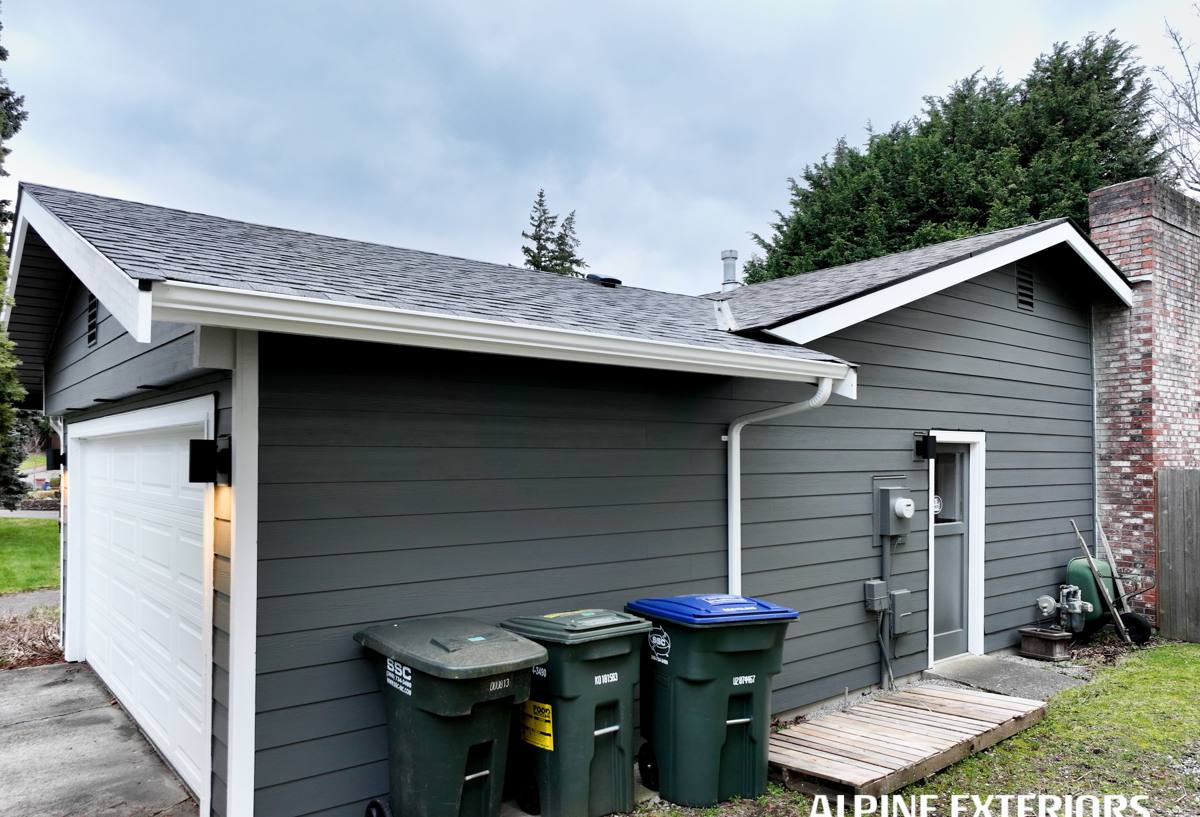
Why Salt Air, Driving Rain, and Moss Season Matter More Here
Three regional conditions do most of the damage to siding in Barkley and the surrounding Bellingham area:
- Salt air: Proximity to Bellingham Bay means airborne salt accelerates corrosion on fasteners, flashing, and any metal trim components — and it degrades cheap coatings faster than inland exposure would.
- Driving rain: Wind-driven rain doesn't just wet a wall surface, it pushes water sideways and upward, testing every lap joint, seam, and penetration. Siding that relies on caulk alone to stay watertight will eventually let water through.
- Extended moss season: Shade, moisture, and mild temperatures let moss and algae establish on north- and west-facing walls, especially under eaves and behind landscaping. Moss holds moisture against the siding surface far longer than open air ever would.
None of these conditions are unique to Barkley, but the combination — coastal air plus a long, wet shoulder season — is a tougher test than siding installed on the dry side of the Cascades ever faces.
Why We Only Install James Hardie Fiber Cement Siding
We standardized on James Hardie fiber cement siding for every home we work on, including Barkley, and we don't install vinyl, LP SmartSide, or cedar. That's not a marketing position — it's a practical one, based on what holds up to this specific climate.
Fiber cement is non-combustible and dimensionally stable, meaning it doesn't expand and contract with moisture the way wood-based products do. That matters directly here: wood-based siding that swells and shrinks through a wet winter and a dry summer opens up seams and joints over time, and those gaps are exactly where wind-driven rain gets in. Vinyl, for its part, can warp in direct sun and becomes brittle in cold snaps, and its seams are a weak point against driving rain. James Hardie's ColorPlus factory finish is also baked on and warrantied against fading and peeling, which matters in a marine climate where a painted or primed surface is constantly cycling between wet and dry.
We're not going to tell you another product is junk — plenty of products perform fine in the right application. We just don't think they're the right call for a home that has to withstand salt air, sideways rain, and months of shade-driven moss growth every single year, and we'd rather install one product correctly than hedge across several.
What a Correct Siding Installation Actually Involves
The siding itself is only part of the system. Most siding failures we see in this region happen behind the boards, not on the surface. A correct installation addresses each of these layers:
Tear-Off and Sheathing Inspection
Once old siding comes off, the sheathing underneath gets inspected for rot, soft spots, and prior water damage — particularly around windows, doors, and any place trim previously met the wall. Skipping this step and siding over hidden damage just seals the problem in.
Weather-Resistive Barrier and Flashing
A properly lapped weather-resistive barrier, correctly integrated flashing at every window, door, and roof-to-wall intersection, and a drainage plane behind the siding are what actually keep driving rain out. Fiber cement siding is only as good as the water management system installed underneath it — this is the part homeowners never see, and it's the part that matters most.
Fastening and Clearances
James Hardie specifies exact nailing patterns, fastener types, and minimum clearances from grade, roof lines, and decks. In a salt-air environment, using the correct corrosion-resistant fasteners isn't optional — the wrong fastener will rust and stain the siding face within a few years.
Finish Details
Caulking only the joints Hardie specifies (not every seam, which can trap moisture), properly backed butt joints, and correctly installed trim and starter strips round out an installation that will actually perform for decades rather than just look good on install day.
Our Installation Process in Barkley
We keep the process straightforward and communicate at each stage:
- On-site assessment: We walk the exterior, check for existing moisture damage, and evaluate sun/shade exposure and drainage patterns specific to the lot.
- Product and color selection: We walk through James Hardie's HZ5 line (engineered for the Pacific Northwest's moisture exposure) and ColorPlus options, factoring in how a color and sheen will hold up against this area's moss and mildew conditions.
- Tear-off and prep: Old siding removed, sheathing inspected and repaired as needed, weather barrier and flashing installed correctly the first time.
- Installation to manufacturer spec: Fastening, clearances, and joint treatment done to James Hardie's published installation requirements — which is also what keeps the manufacturer's warranty intact.
- Final walkthrough and cleanup: We review the finished work with the homeowner and clear the site of debris and old material.
What Siding Installation Costs Depend On
Every home is different, so we don't quote broad numbers without seeing the house, but the factors that move a project's cost are consistent:
| Cost Factor | Why It Matters |
|---|---|
| Home size and stories | More square footage and multi-story walls mean more material and more labor, including staging for upper floors |
| Existing siding removal | Tear-off of old vinyl, wood, or damaged siding adds labor and disposal cost versus installing over new construction sheathing |
| Hidden moisture damage | Rotted sheathing or framing discovered during tear-off requires repair before new siding goes on |
| Siding profile and detail | Lap siding is generally more economical than board-and-batten or mixed-material facades with more cuts and trim work |
| Trim, corners, and architectural features | Homes with more windows, gables, and trim detail require more precision cutting and finishing time |
| Color and finish | Factory ColorPlus finishes vary by line, and custom paint-matching adds cost versus standard color options |
Why a Crew That Already Works in Barkley Makes a Difference
Siding contractors who work regularly in Barkley and the surrounding Bellingham area develop a feel for which walls take the worst weather exposure, how far moss creeps up a north-facing elevation by mid-winter, and where wind-driven rain tends to concentrate against a given roofline. That local pattern recognition shapes real decisions — where extra flashing attention matters most, which elevations benefit from a different finish, and how to sequence a job around Whatcom County's wet stretches so materials and open wall sections aren't sitting exposed longer than necessary.
It also means familiarity with local permitting requirements and an established process for scheduling around this area's weather windows, rather than learning those things on your project.
Signs Your Barkley Home Needs New Siding
- Visible warping, buckling, or gaps at siding seams and corners
- Soft or spongy spots when you press on the siding surface
- Persistent moss or algae staining that returns shortly after cleaning
- Peeling or bubbling paint, especially on wood-based or older primed siding
- Rising heating bills without another clear explanation
- Visible daylight or drafts around window and door trim
- Siding that's more than 20-25 years old and has never been fully inspected behind the surface
Any one of these on its own might be minor. Several together usually mean the water-management layer behind the siding has been compromised for a while.
Maintaining Your New Siding in Bellingham's Climate
James Hardie fiber cement is low-maintenance compared to wood or vinyl, but "low-maintenance" doesn't mean "no maintenance" in a climate like this. A yearly rinse to clear moss and organic buildup before it establishes, prompt attention to any caulking that cracks at trim joints, and keeping gutters clear so overflow doesn't run down the wall face will all extend the life of the installation well beyond its warranty period. Shaded, north-facing walls in particular deserve a closer look each fall before the wet season sets in.
If you're weighing a siding replacement for a home in Barkley, we're happy to take a look and give you an honest read on what your home actually needs — no pressure, no inflated scope. Fill out the form below for a free estimate.