 Bellingham Siding
 Building a Deck That Actually Holds Up in Barkley
Barkley is one of Bellingham's more established mixed neighborhoods, with a good number of homes old enough to have gone through a few decks already and new enough to still be making first-time decisions about outdoor living space. Either way, the same problem shows up eventually: a deck that looked great when it went in starts showing soft boards, black streaks, loose railings, or rust bleeding from fastener heads within a handful of years. That's not bad luck. It's what Whatcom County's marine climate does to a deck that wasn't built or maintained with this specific weather in mind.
This page is about one job, done right, in one place: custom deck construction for Barkley homeowners in Bellingham. Not a national how-to, not a generic remodeling checklist — the actual decisions that matter when the deck you're building has to survive our winters year after year.
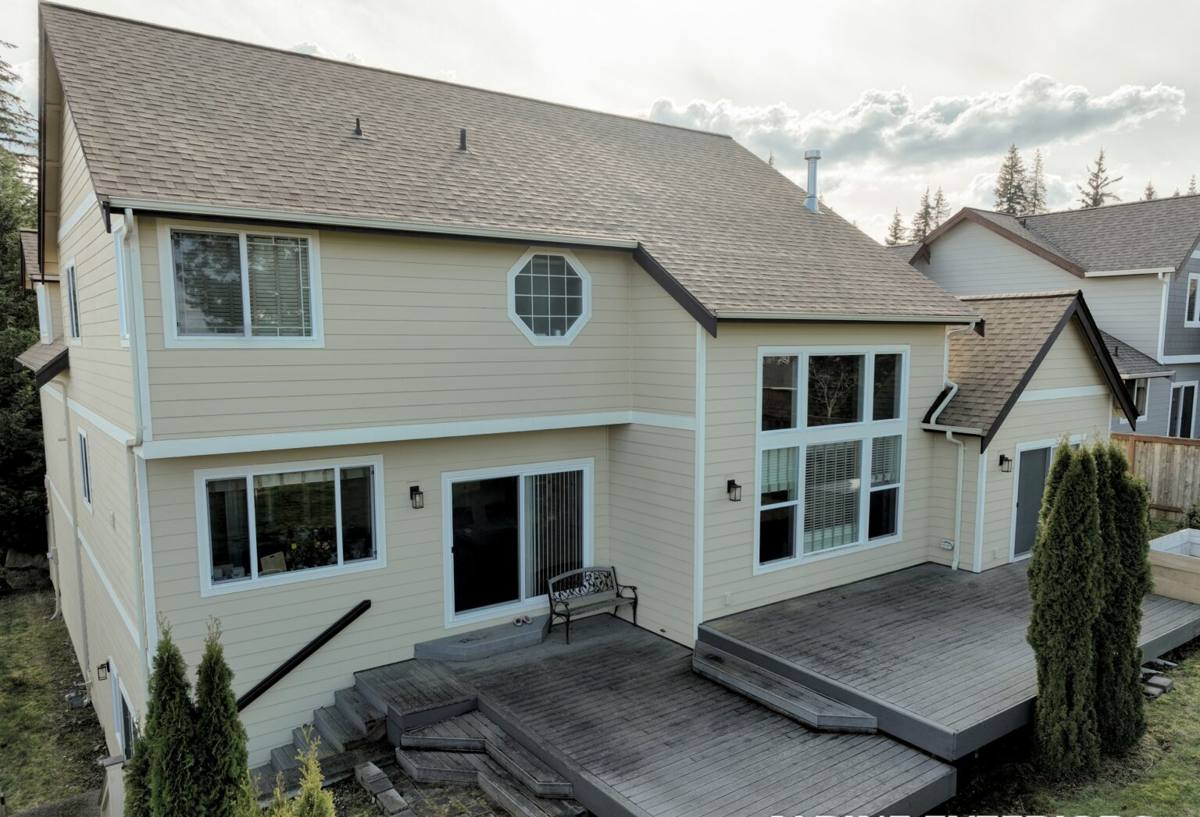
What Bellingham's Climate Does to a Deck Over Time
Whatcom County doesn't get the kind of extreme heat or hard freezes that stress a deck structurally the way some regions do. Instead, we get something slower and, in some ways, harder to fight: long stretches of damp, mild weather where wood and hardware rarely get a chance to fully dry out between rain events.
Moss, Algae, and Constant Moisture
Fall through spring in Bellingham is one long moss season. Shaded decks, north-facing decks, and decks under tree canopy — common on Barkley lots with mature conifers and maples — stay damp for days at a time. Moss and algae don't just look bad; they hold water against the deck surface, which accelerates wood rot and makes composite and wood decking alike slicker and more dangerous underfoot.
Salt Air and Corrosion
Even for homes that aren't waterfront, Bellingham sits inside a marine climate zone. The moisture-laden air off the Salish Sea moves inland across the whole region, and it carries enough salt content to accelerate corrosion on fasteners, brackets, and railing hardware faster than you'd see in a dry inland climate. A deck built with the wrong grade of screws or hangers will show rust streaks down the face boards within a season or two — and rusting hardware is a structural problem, not a cosmetic one.
Driving Rain and Wind-Driven Water
Our rain doesn't just fall straight down. Wind-driven rain gets pushed sideways into ledger connections, under poorly flashed rim joists, and into end grain that isn't sealed. Over time, that's where you get hidden rot — the kind that doesn't show up until a board or post feels soft underfoot.
Choosing the Right Decking Material for a Barkley Home
There's no single "best" decking material — there's the material that fits your budget, your maintenance tolerance, and how much shade and moss exposure your specific lot gets. Here's how the common options actually perform in our climate.
| Material | Upfront Cost | Maintenance in Our Climate | Typical Lifespan Here |
|---|---|---|---|
| Pressure-treated wood | Lowest | Needs cleaning and re-sealing every 1-2 years to resist moss and rot | 10-15 years with consistent upkeep |
| Cedar | Moderate | Naturally rot-resistant but still needs regular cleaning and periodic finish | 15-20 years with upkeep |
| Capped composite | Higher | Periodic washing to keep moss from taking hold on the surface; no sealing or staining | 25-30 years |
| PVC decking | Highest | Lowest maintenance; resists moisture absorption almost entirely | 25-30+ years |
Wood costs less to install but asks more of the homeowner every year in a climate like ours — skip a season of cleaning and sealing here and moss and gray staining move in fast. Composite and PVC cost more up front but largely shrug off the moisture exposure that wears wood down. Neither choice is wrong; it's a question of whether you'd rather pay in maintenance time or in material cost.
Framing and Structure: What's Underneath Matters Most
The decking surface is what you see, but the framing underneath is what determines whether the deck is still safe in fifteen years. This is where a lot of corner-cutting happens on lower-bid jobs, because it's invisible once the boards go down.
Footings and Our Soil
Whatcom County's clay-heavy soils hold water and can shift with seasonal saturation. Footings need to be sized and set to the correct depth for our soil and frost conditions, not just poured to a minimum spec. Undersized or shallow footings are one of the most common causes of a deck that develops a noticeable bounce or lean within a few years.
Ledger Attachment and Flashing
Where the deck attaches to the house is the single most important connection on the whole structure, and it's also the most common source of hidden rot. Correct flashing — installed so water sheds away from the house rather than behind the ledger board — is non-negotiable in a climate that sees this much wind-driven rain. We flash every ledger connection properly, every time, because repairing rot behind a ledger later means tearing into siding and framing that should have been protected from day one.
Joist Spacing and Drainage
Joist spacing needs to match both the span and the decking material — composite and PVC often call for tighter spacing than solid wood. Just as important is making sure water has somewhere to go once it's under the deck: proper grading, gaps for airflow, and joist tape on the framing all reduce how long wood stays wet after a storm.
Railings, Fasteners, and Hardware Built for This Climate
Railings and hardware get less attention than decking material, but in a marine climate they're often the first thing to fail visibly.
Fastener Grade Matters
Standard zinc-coated screws and nails corrode faster here than they would in a drier climate, and once a fastener starts rusting, it weakens and can stain the surrounding wood or composite. We use stainless steel or heavy-coated, exterior-rated fasteners and hidden fastener systems rated for coastal and marine exposure, not general-purpose hardware.
Railings and Code
Guardrail height, baluster spacing, and load requirements are set by the adopted building code, and inspectors check them. Beyond meeting code, railing material choice matters for our climate too — wood railings need the same upkeep as wood decking, while metal, composite, or cable railing systems hold up with less attention, provided the hardware itself is corrosion-rated.
Our Process for a Barkley Deck Build
Every deck we build in Barkley follows the same sequence, because skipping steps is exactly how climate-related failures show up early.
- On-site walkthrough to assess sun/shade exposure, drainage, existing structure (if replacing a deck), and how the space will actually be used
- Design and material discussion based on your maintenance preference and budget, not a one-size-fits-all package
- Permit drawings and submittal to the City of Bellingham (or Whatcom County, if the property falls outside city limits)
- Footing layout and inspection before any framing goes up
- Framing with pressure-treated structural lumber, correctly flashed ledger connections, and corrosion-rated hardware throughout
- Decking, railing, and stair installation to the material and design agreed on upfront
- Final walkthrough covering how to care for your specific decking material through our wet season
Permits and Local Requirements
Most custom deck projects in Bellingham require a building permit, and the specifics — setbacks, height limits near property lines, guardrail requirements — depend on your lot and zoning. Barkley includes a mix of lot sizes and older and newer construction, so we don't assume; we pull the actual requirements for your property before design work locks in. If your project is a straightforward replacement of an existing deck at the same footprint, the permit process is usually simpler than a new build or an expansion, but it's still worth confirming rather than assuming.
Keeping Moss and Moisture From Winning
Even a well-built deck needs some seasonal attention in this climate. The goal isn't to eliminate moisture exposure — that's not realistic here — it's to keep water moving off the deck instead of sitting on it.
- Sweep leaves and debris off the deck surface regularly through fall, especially between boards where they trap moisture
- Wash the surface at least once or twice a year to remove early moss and algae growth before it takes hold
- Check that gaps between boards haven't filled with debris that blocks drainage
- Inspect railing posts and stair stringers for soft spots or rust streaks each spring
- Re-seal or re-stain wood decking on the schedule the finish manufacturer recommends — don't wait until it looks obviously worn
- Keep gutters and downspouts near the deck clear so runoff isn't dumping extra water onto or under the structure
Why Hiring a Crew That Already Works Barkley Matters
A deck contractor who mostly works drier inland regions will still build something structurally sound — the framing math doesn't change by zip code. What changes is judgment: which fastener grade is worth the upcharge, how much roof and tree cover a given lot actually gets, whether a particular ledger detail needs extra attention because of how the house was originally built. That judgment comes from having done this work repeatedly in Bellingham's specific conditions, not from a spec sheet.
We're a local crew that builds and repairs decks throughout Bellingham and Whatcom County, and we bring the same standards to every Barkley project: correct footings for our soil, proper ledger flashing, corrosion-rated hardware, and a materials conversation that's honest about what each option will actually ask of you over the next fifteen or twenty years.
If you're planning a new custom deck or replacing one that's showing its age, we're happy to come take a look and talk through what makes sense for your home. There's a free, no-pressure estimate form below — reach out and we'll get you a straight answer.